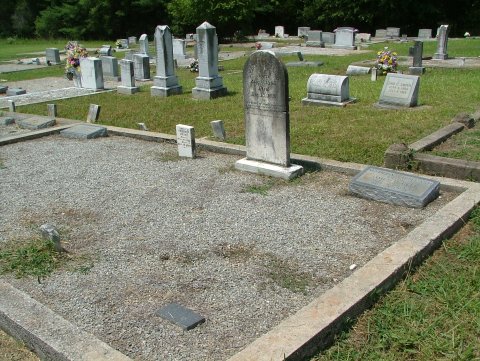
Elijah Major Holland, the son of John Holland and Elizabeth Hutchinson Majors, was born on May 18, 1829 in Anderson, Anderson County, South Carolina. He was the oldest of 11 children—Elijah Major Holland, Martha L. Holland, Gambrell W. Holland, Martha A. Holland, Leroy Thomas Holland, Caroline Emeline “Emma” Holland, Symantha C. Holland, Miranda Elizabeth Holland, Nancy L. Holland, Samantha Jane Holland, Jane A. Holland, John Louis Holland, Mary M. Holland, George William Perry Holland, and Eliza Amanda Holland, and P. C. Holland. Elijah is my 2nd great grand uncle with our nearest common relatives being his parents. His brother Leroy is my 2nd great-grandfather.
Update 12/16/24: After thoroughly reviewing my research, I have revised the number of children born to John and Elizabeth Holland from 16 to 11. I have crossed out the names of the children that I no longer included in this family.
On August 16, 1850, the Holland family resided in the Eastern Subdivision of Anderson County. Elijah, aged 21, was a student. His father was a farmer with real estate valued at $1500. His brother Leroy, aged 15, was a farmer. William, the baby of the family at nine months, was enumerated as George W. P. Holland.
Elijah married Jemima Kay, the daughter of William Strather (or Strother) Kay and his wife, Sarah. Although I have not found a specific marriage record for the couple, I believe that they likely married between 1850 and 1852. In the 1850 census, both Elijah and Jemima were living with their respective parents and the first child was born about 1852. Elijah and Jemima were blessed with seven children: Elizabeth Holland, Sarah Ann Elizira Holland, Doctor Carroll Holland, William Perry Holland, Matilda Armathine Holland, Robert E. Lee Holland, and Anda Holland.
On June 30, 1860, the Holland family resided in Regiment 4 of Anderson County. Elijah, the head of the household, worked as a farmer. His real estate was valued at $550, and he had a personal estate worth $100. The household included three children: Elizabeth, Elzira, and Doctor (enumerated as Carroll). They lived next door to Jemima’s parents.
At the age of 31, Elijah enlisted as a private in Captain William Anderson’s Company J, 4th Regiment South Carolina Infantry Volunteers in Anderson on April 14, 1861. His commitment was to serve South Carolina in the Civil War for a period of one year. He officially mustered in on June 7, 1861, at Columbia, South Carolina. By the close of 1861, Captain Anderson reorganized the company, drawing from the re-enlisted men of the 4th Regiment South Carolina Volunteers at Camp Taylor, near Orange Court House, Virginia. Elijah’s enlistment was extended for two years or until the end of the war, and he now served in Company L of the Palmetto Regiment South Carolina Sharp Shooters.

In January 1862, Elijah was admitted to Moore Hospital at General Hospital No. 1 in Danville, Virginia. Subsequently, he was transferred to a General Hospital in Richmond, Virginia. The Palmetto Regiment South Carolina Sharp Shooters, under the command of Maj. J. H. Whitner, mustered into service on March 29, 1862. Elijah’s muster roll records indicate a second enlistment in Richmond on April 16, 1862. During the Battle of Seven Pines at Fair Oaks, Virginia, on May 31, 1862, he sustained a gunshot wound to the thigh. Captured on June 1, 1862, he was admitted to Chesapeake U.S.A. General Hospital at Fort Monroe in Hampton, Virginia, on June 8, 1862. Records show that he was subsequently sent to Fort Delaware in Delaware on July 15, 1862, and delivered there by an attachment of New York Volunteers on July 16, 1862. Later, Elijah appeared on a list of non-commissioned officers and privates exchanged at Aiken’s Landing on August 5, 1862. Aiken’s Landing, situated on the north bank of the James River south of Richmond, was used for the exchange of Union and Confederate prisoners. His company muster roll recorded Elijah as being at home on wounded furlough during September and October 1862. He rejoined the regiment in November and December 1862 and continued to serve throughout 1863. As the two-year enlistment period concluded, a third re-enlistment took place in Morristown, Tennessee, on January 21, 1864, under Col. Walker. Elijah received clothing in late June 1864 and appeared on the regiment’s muster rolls for July, August, November, and December 1864. He remained present in January and February 1865. Over the course of the war, Elijah likely saw battle at the following:
- Battle of Williamsburg (May 5, 1862)
- Battle of Seven Pines (May 31-June 1, 1862) – he was injured on May 31
- Battle of Campbell's Station (November 16, 1863)
- Battle of the Wilderness (May 5-7, 1864)
- Battle of Spotsylvania Court House (May 9–21, 1864)
- Battle of North Anna (May 23-26, 1864)
- Battle of Totopotomoy Creek (May 28-30, 1864)
- Battle of Cold Harbor (May 31-June 12, 1864)
- Second Battle of Deep Bottom (August 14–20, 1864)
- Second Battle of Ream's Station (August 25, 1864)
- Battle of Darbytown Road (October 27-28, 1864)
Following Lee’s surrender, Elijah received parole at Appomattox Court House, Virginia, on April 9, 1865. His brother, Leroy Thomas Holland, was also present. Leroy had served with Company L, Second South Carolina Rifles, in Jenkins Brigade. Both were lucky to have survived.
In 1869, 82 acres of Elijah’s land was forfeited and sold.
In January 1870, Elijah received an appointment as a steward at Masonic Belton Lodge No. 130. As a steward, he assumed responsibilities for managing logistical tasks within the organization, contributing to the smooth functioning of the lodge. His dedication to this role played a crucial part in maintaining the lodge’s operations and fostering a sense of community among its members.
On August 16, 1870, the Holland family resided in the Belton Township of Anderson County, South Carolina. Elijah, then 40 years old, worked as a farm laborer, while his wife Jemima managed the household. He had a personal estate worth $745. Their family included several children:
- Elizabeth and Elzira, both teenagers, were “at home”
- Doctor (aged 13) and Perry (aged 11) worked as day laborers, although neither could read or write
- The youngest children, Armathine (aged 4) and W.P. (only six months old), were also “at home”
Elijah’s brother, William Perry Holland (aged 20), was employed as a day laborer. Jemima, Elijah’s wife, was unable to write.
The Holland family lived just two houses away from Robert and Frances (Holland) King, Elijah’s grand uncle and aunt. Frances was the daughter of Moses Holland, a Baptist minister and a leading citizen in Anderson County who founded numerous churches in the area. He had also served as a drummer during the Revolutionary War and witnessed Cornwallis’ surrender at Yorktown in 1781.
In late December 1870, Elijah received another appointment—this time as a Tiler at the Masonic lodge. In this capacity, he was responsible for guarding the Lodge Room door, ensuring security, and maintaining the solemnity of Masonic rituals.
In July 1873, Elijah made a significant purchase: a Singer sewing machine for Jemima. The Anderson Agency, recognizing the influence of well-known community members, had published a list of endorsements as part of an advertising campaign. Their belief was that the community would trust their judgment and perhaps follow suit in buying similar machines.
 |
Singer sewing machine, The Intelligencer, September 27, 1877 |
In January 1874, Elijah was appointed treasurer of the newly formed National Grange of the Order of Patrons of Husbandry. The Grange, a social organization in the United States, aimed to promote the economic and political well-being of communities and agriculture.
 |
Promotional poster offering a ‘gift for the grangers,’
ca. 1873, Strobridge Lithographing Company, available
from the United States Library of Congress’s Prints and
Photographs division, public domain |
In August 1874, Elijah, a friend of Maj. John B. Moore, played a significant role in nominating Moore for the office of Senator in the upcoming election. This act demonstrated both Elijah’s loyalty and his active involvement in local politics. Additionally, Elijah received an appointment to the Executive Committee of the newly organized Broadway Tax Union. The union convened at Neal’s Creek Baptist Church, where they planned to hold their inaugural meeting during an August 14 picnic. At this gathering, Maj. Moore and other speakers would address topics related to the Tax Union. The public, especially the ladies, were cordially invited to attend and encouraged to bring their baskets of food—a combination of civic engagement and social gathering.
Later that year, in October 1874, Elijah assumed the role of treasurer for the newly formed Broadway Division of the Sons of Temperance at Neal’s Creek Baptist Church. The Sons of Temperance were a fraternal group dedicated to promoting abstinence and temperance within society. Their mission extended beyond personal conduct; they also provided support to members and their families, helping them navigate life’s challenges. The Broadway Division consisted of 31 members of the community.
In 1875, Elijah’s appointment as treasurer of the National Grange of the Order of Patrons of Husbandry was extended. Additionally, he served as treasurer for the Neal’s Creek Division of the Sons of Temperance, with his appointment extended for the next quarter. A public installation took place at Neal’s Creek Baptist Church on April 10, 1875. The division, consisting of 104 members, continued to extend his appointment for another quarter during a meeting on June 19, 1875. Elijah’s role as treasurer extended into 1876 as well. In February 1876, citizens of Broadway Township organized a Democratic Club at Neal’s Creek Baptist Church, where Elijah was elected treasurer. Their inaugural event was a picnic celebrating George Washington’s birthday, featuring speakers Maj. John B. Moore and E. B. Murray, along with entertainment provided by the Anderson Brass Band. The public was invited to attend, and both the Broadway Division of Sons of Temperance and the Neal’s Creek Grange generously offered the use of their hall for the occasion.
Elizabeth (Major) Holland, Elijah’s mother, passed away on February 27, 1876. It is believed that she was laid to rest in the Math Cobb Cemetery, located across the railroad from the old Holland home place on Pea Creek.
In August 1876, the Hampton Guards, a mounted rifle club, was established at Temperance Hall near Neal’s Creek Baptist Church. Comprising 50 members, the club elected Elijah as treasurer, while his brother Leroy assumed the role of bugler.
In mid-November 1876, the Broadway Democratic Club hosted a basket dinner at Neal’s Creek Baptist Church. The invitation extended to all citizens of the township, regardless of their voting choices in the recent election. The purpose of the gathering was twofold: to express gratitude to those who had cast their votes for Wade Hampton, a Democratic candidate for governor, and to acknowledge those who abstained from voting. The organizers specifically requested that the ladies attend with their baskets well filled, contributing to the communal feast. Elijah and his father, Captain John Holland, played active roles in organizing the event. They were assigned to a committee responsible for coordinating the logistics and ensuring the smooth execution of the dinner. In late January 1877, Elijah resumed his position as an officer within the Broadway Division of the Sons of Temperance. By mid-February 1877, Elijah’s name appeared on a published list of individuals who had voluntarily contributed 10 percent of their earnings to support the Hampton government.
In early April 1877, the local newspaper reported that a man residing on what was referred to as Elijah’s ‘plantation’ had spent the entire Sunday plowing the fields, believing it was Saturday. It was not until he completed his work for the day that he realized it was, in fact, Sunday. In mid-April 1877, Elijah distributed a sample of his wheat to fellow community members. The wheat, measuring 32 inches in length, was considered a ‘very fine sample,’ leading to the assumption that his crop would yield a substantial harvest that year.
John Holland, Elijah’s father, passed away in Anderson on September 9, 1877. It is believed that he was laid to rest at Math Cobb Cemetery, next to his wife, Elizabeth. John had accumulated a substantial amount of land, and in his will, he directed his sons Elijah, Leroy, and William to choose an impartial individual to divide the land into three equal and equitable tracts. Additionally, John’s personal property was to be sold, with the proceeds distributed among the three sons. However, if any of them perceived that a specific portion of land held greater value than the others, any discrepancies would be rectified using funds generated from the sale of his personal property, which was not explicitly specified in the will. In October 1877, some court action regarding John Holland’s estate was underway, involving Elijah, his sisters Martha, Nancy, and Samantha, and others noted as ‘et al.’ I discovered a document that was an index of Anderson County court records in the unindexed records posted on the Family Search website. The document noted that there were multiple pages within the court records related to John’s estate. Although the document I found included page or record numbers that normally correspond to the actual court records, none of the records are numbered. Typically, I can navigate directly to the specific page noted on an index of this sort and go straight to the record, but not in this case. This task involves a thorough examination of the records, page-by-page, which is a significant undertaking. I have started that process and will set aside time periodically to continue looking. I am very interested in learning more about John Holland, my 3rd great grandfather.
 |
The Intelligencer, Anderson,
South Carolina, October 11, 1877 |
In July 1878, Elijah gained admission to a newly established division of the Sons of Temperance, part of the Grand Division of South Carolina. Prior to his acceptance, Elijah underwent a credential check to serve as a representative for the local Broadway chapter. The division, named ‘Excelsior, No. 114,’ convened during a summer session in Charleston, South Carolina. It was believed that this new division, along with several existing ones, was embracing positive policies, and the organization’s prospects were looking promising.
In May 1880, Elijah participated in a meeting of the Neal’s Creek chapter of the Anderson Democratic Club. During this gathering, he received an appointment to the executive committee.
On June 28, 1880, Elijah and his family resided in the Broadway Township of Anderson County. Elijah worked as a farmer, tending to his own property. His wife, Jemima, managed the household, ensuring its smooth operation. Their son, William (aged 20), actively contributed to the farm work, sharing the responsibilities. Meanwhile, their daughter, Armathine (aged 16), likely assisted her mother with various household chores. The two youngest children in the household, Robert and Anda, were both attending school. They lived next door to Elijah’s son, Doctor, along with Doctor’s wife Christianna and their daughter Effa.
Elijah’s farm was well-established and thriving. It encompassed 47 acres of tilled land, along with 57 permanent acres dedicated to meadows, pastures, orchards, and/or vineyards. Additionally, there were 15 acres of woodland. The total valuation of the farm was $1200, with farming equipment valued at $50 and livestock at $200. In 1879, Elijah spent $50 on fertilizer. The estimated value of all farm productions amounted to $760. Their livestock included one mule, two milch cows (which produced 100 pounds of butter in 1879), two other cattle, and two calves. Two cows were slaughtered during 1879. The farm also housed five pigs and 56 chickens, which yielded 56 dozen eggs. Elijah cultivated various crops: 20 acres of Indian corn (with a harvest of 250 bushels), five acres of oats (yielding 30 bushels), 10 acres of wheat (producing 135 bushels), and 12 acres of cotton (resulting in eight bales). Additionally, Elijah planted potatoes. The family also cut 25 cords of wood, valued at $12.
On June 24, 1882, Elijah represented the 4th Regiment at a meeting held in the Judge of Probate’s office. The purpose was to organize a survivor’s gathering for soldiers who had served from Anderson County during the Civil War. Scheduled for July 21, 1882, this event coincided with the 21st anniversary of the First Battle of Manassas. The survivor’s meeting proved successful, drawing approximately 3,000 survivors and their families. Bands played, speakers addressed the crowd, and food was shared, creating a memorable occasion.
On August 2, 1883, Elijah received an appointment to a committee responsible for overseeing the cleanup of their churchyard.
On September 10, 1883, Eliza Ann Holland, aged 28 and the daughter of Elijah’s brother Leroy, passed away in Anderson County. Unfortunately, the local newspaper initially misreported her as Elijah’s daughter, but they promptly issued a retraction the following week. Eliza was laid to rest at Neal’s Creek Baptist Church cemetery.
In April 1887, Elijah shared a pocket knife with the newspaper staff. The knife was believed to be a relic of his late father, although Elijah himself was uncertain about the merchant who originally sold it. This knife had been purchased from the first store at Anderson Court House.
On May 14, 1887, Elijah assumed the role of postmaster for the Neal’s Creek post office in Anderson County. His appointment followed the resignation of J. A. Major, Esq. Elijah was known for his cleverness and accommodating approach in managing the post office.
In June 1889, Elijah’s name was drawn to serve as a juror during the upcoming term of court in Anderson County.
In mid-February 1891, Elijah, along with several others in the community, signed a public notice forbidding the public from trading or cashing ‘a note given to J. E. Craig, Agent for the Combination Wire Fence.’ They explicitly stated that they would not assume responsibility for the note, as it had been issued by Mr. Craig under false pretenses.
Leroy, Elijah’s brother, passed away in Beaverdale, Whitfield County, Georgia, on May 4, 1892, due to pneumonia. He found his final resting place at Deep Springs Baptist Church Cemetery in Whitfield County. Leroy’s son, Aaron Hall Holland, believed that his father had worked himself to exhaustion, ultimately leading to his death.
In October 1892, Elijah’s name was drawn to serve as a trial juror during the fall term of court in Anderson County.
In mid-May 1898, survivors from Regiment 4, Company L convened with a specific purpose: to revise the company roll. Unfortunately, many of the original records had been lost or destroyed. However, an original roll list was published in The Anderson Intelligencer, and Elijah’s name appeared on that list.
On June 9, 1899, Elijah’s wife Jemima passed away at their home in Broadway Township. An invalid, she had endured an affliction for several years. Jemima was a respected member of Neal’s Creek Baptist Church, and the following day, she was laid to rest in the church cemetery. Her memory was cherished by numerous family members and friends. Jemima was survived by Elijah and their six children.
Between 1894 and 1895, Elijah transferred land on Pea Creek in Anderson County to Joseph N. Brown.
On June 12, 1900, Elijah resided with his son Perry and Perry’s family in the Broadway Township. At the age of 71, Elijah worked as a carpenter. Perry, on the other hand, was a farmer. He and his wife Fannie had been married for 16 years. Fannie, a mother of eight children, had six still living at home. Four of these children were attending school, while the youngest two, Willie (aged 4) and Addie (aged 2), were not yet of school age.
On November 8, 1904, Elijah was appointed as one of the three managers from Neal’s Creek Church to oversee elections in Anderson County.
On April 23, 1910, Elijah resided with his son Anda and Anda’s family in the Williamston Township of Anderson County. At the age of 81, Elijah had retired from farming. His son Anda worked as a farmer on a general farm. Anda and his wife Dena had been married for 11 years. The household would have been filled with the joyful sounds of their four grandchildren—Anne, James, Justus, and Joseph.
Elijah’s sister Emeline passed away in Anderson on March 6, 1911. She was laid to rest at the Mullikin Family Cemetery in Anderson. His sister Samantha passed away on October 4, 1914, in Clarkesville, Habersham County, Georgia, following an acute indigestion attack. She found her final resting place at Old Clarkesville Cemetery in the same town. Just over a year later, his brother William (aged 66) took his own life on December 19, 1915 by jumping out a second story window of the Florence, South Carolina infirmary he was being treated at. His death followed years of severe depression. William was buried in the family plot at Mount Hope Cemetery in Florence.
Elijah, aged 87, passed away on July 7, 1916, due to senility in Williamston, likely at the home of his son Anda. The details for his death certificate were provided by Anda. Elijah was laid to rest at Neal’s Creek Baptist Church Cemetery in Anderson on July 8.
References
- Aaron Hall Holland letter to Samuel Jackson Holland, May 15, 1964.
- Battle of Seven Pines; https://en.wikipedia.org/wiki/Battle_of_Seven_Pines.
- Brief Mention, death of Miss Eliza A. Holland, The Anderson Intelligencer, Anderson, South Carolina, October 4, 1883.
- Brief Mention, The Anderson Intelligencer, Anderson, South Carolina, April 5 and 12, 1877.
- Broadway Tax Union, The Anderson Intelligencer, Anderson, South Carolina, August 6, 1874.
- Death Comes Suddenly to Mrs. W. D. Grant-After an Illness of Only a Few Hours One of This City’s Beloved Mothers Passed Away Sunday, newspaper unknown, October 1914.
- Democratic Club, The Anderson Intelligencer, Anderson, South Carolina, February 3, 1876.
- Elijah M. Holland headstone, Neals Creek Baptist Church Cemetery, Anderson, South Carolina.
- Elijah M. Holland, Certificate of Death no. 35864, State of South Carolina, Bureau of Vital Statistics, State Board of Health.
- Elijah M. Holland, the U.S., Selected Federal Census Non-Population Schedules (Agriculture 1880), Broadway, Anderson County, South Carolina.
- Elijah M. Holland, U.S., Appointments of U. S. Postmasters, 1832–1971.
- Elijah M. Holland, U.S., Confederate Soldiers Compiled Service Records, 1861–1865.
- Eureka Items, The Intelligencer, Anderson, South Carolina, April 28, 1887.
- Find a Grave, database and images (https://www.findagrave.com/memorial/37853725/caroline_emeline-mullikin: accessed July 8, 2024), memorial page for Caroline Emeline Holland Mullikin (18 Dec 1838–6 Mar 1911), Find a Grave Memorial ID 37853725, citing Mullikin Family Cemetery, Anderson, Anderson County, South Carolina, USA; maintained by James B. Young (contributor 46624588). State of South Carolina, County of Anderson, In the Court of Probate, The Anderson Intelligencer, Anderson, South Carolina, October 11, 1877.
- Find a Grave, database and images (https://www.findagrave.com: accessed 26 February 2021), memorial page for Samantha Jane Holland Grant (12 May 1842–4 Oct 1914), Find a Grave Memorial no. 54786280, citing Old Clarkesville Cemetery, Clarkesville, Habersham County, Georgia, USA; maintained by Joyce DeCoff Winnett (contributor 48122649).
- Find a Grave, database and images (www.findagrave.com/memorial/130529182/william-perry-holland: accessed 11 July 2021), memorial page for William Perry Holland (20 Nov 1849–19 Dec 1915), Find a Grave Memorial ID 130529182, citing Mount Hope Cemetery, Florence, Florence County, South Carolina, USA; maintained by Find a Grave (contributor 8).
- For the Anderson Intelligencer, The Anderson Intelligencer, Anderson, South Carolina, January 15, 1874.
- For the Senate, The Anderson Intelligencer, Anderson, South Carolina, August 6, 1874.
- Grand Mass Meeting, The Anderson Intelligencer, Anderson, South Carolina, November 16, 1876.
- Hampton Guards, The Anderson Intelligencer, Anderson, South Carolina, August 24, 1876.
- John Holland, Will, South Carolina, U.S., Wills and Probate Records, 1670–1980.
- Jump Proves Fatal: William P. Holland Dies from Injuries at Florence, The Greenville News, Greenville, South Carolina, December 23, 1915.
- Local Items, The Intelligencer, Anderson, South Carolina, May 12, 1892.
- Local Matters, Brief Mention, The Anderson Intelligencer, Anderson, South Carolina, January 25, 1877.
- Local News, Brief Mention, The Anderson Intelligencer, Anderson, South Carolina, August 2, 1883.
- Local News, Mrs. Jemima Holland, The Anderson Intelligencer, Anderson, South Carolina, June 14, 1899.
- Local News, The Anderson Intelligencer, Anderson, South Carolina, June 6, 1889 and October 5, 1892.
- Masonic Elections, The Anderson Intelligencer, Anderson, South Carolina, December 8, 1870.
- Masonic, The Anderson Intelligencer, Anderson, South Carolina, January 6, 1870.
- Matilda Holland Geer, Standard Certificate of Death no. 50-016880, Division of Vital Statistics, State Board of Health, State Board of Health.
- Mrs. Jemima Holland, The Anderson Intelligencer, Anderson, South Carolina, June 14, 1899.
- National Grange of the Order of Patrons of Husbandry; https://en.wikipedia.org/wiki/National_Grange_of_the_Order_of_Patrons_of_Husbandry.
- Neal’s Creek Items, The Anderson Intelligencer, Anderson, South Carolina, May 26, 1887 and November 24, 1887.
- Notice of Election for Representative in Congress and Electors of President and Vice-President, The Anderson Intelligencer, Anderson, South Carolina, November 2, 1904.
- Notice, The Anderson Intelligencer, Anderson, South Carolina, February 19, 1891.
- Palmetto Sharpshooters; https://en.wikipedia.org/wiki/Palmetto_Sharpshooters.
- Patrons of Husbandry, The Anderson Intelligencer, Anderson, South Carolina, January 7, 1875 and January 6, 1876.
- Personal visit to Neals Creek Baptist Church Cemetery, Anderson, South Carolina.
- Sale of Forfeited Lands, The Anderson Intelligencer, Anderson, South Carolina, May 23, 1872.
- SINGER! 43 Names Added to the List Within the Last 60 Days!, The Anderson Intelligencer, Anderson, South Carolina, July 3, 1873.
- Sons of Temperance Records, 1844-1967, undated, Phillips Library Finding Aids, Identifier: MSS 215; https://pem.as.atlas-sys.com/repositories/2/resources/559.
- Sons of Temperance, The Anderson Intelligencer, Anderson, South Carolina, October 22, 1874, April 1, 1875, July 1, 1875, and August 1, 1878.
- State of the Order, The Anderson Intelligencer, Anderson, South Carolina, August 1, 1878.
- Survivors of Co. L, The Anderson Intelligencer, Anderson, South Carolina, May 11, 1898.
- The Anderson Democracy Falling into Line, The Anderson Intelligencer, Anderson, South Carolina, May 13, 1880.
- The Hampton Tax-payers, The Anderson Intelligencer, Anderson, South Carolina, February 15, 1877.
- The Survivor’s Reunion on 21st of July, The Anderson Intelligencer, Anderson, South Carolina, June 29, 1882.
- The Survivor's Reunion, The Intelligencer, Anderson, South Carolina, July 27, 1882.
- U.S. Federal Census, Belton, Anderson County, South Carolina, 1870.
- U.S. Federal Census, Broadway, Anderson County, South Carolina, 1880, 1900.
- U.S. Federal Census, Eastern Subdivision, Anderson County, South Carolina, 1850.
- U.S. Federal Census, Regiment 4, Anderson County, South Carolina, 1860.
- U.S. Federal Census, Williamston, Anderson County, South Carolina, 1910.
- Wade Hampton III; https://en.wikipedia.org/wiki/Wade_Hampton_III.