Friday, April 27, 2018

Four Marston infants buried at Hollywood Cemetery

Since this week’s 52 Ancestors theme is “cemetery,” I thought I’d write about four infants I discovered this week—Lilla Lee Marston, Curtis Marston, Nellie Marston, and Ned Mathews Marston. Lilla would be the grand aunt of my brother-in-law, Curtis and Ned would be his uncles, and Nellie his aunt.

The Atlanta Constitution,
November 11, 1892
Hollywood Cemetery is a 127-year-old non-perpetual care cemetery located at 2275 Simpson Road in northwest Atlanta, Fulton County, Georgia. According to an article in The Atlanta Constitution dated July 15, 1897 and titled “City of the Dead Gets Into Court,” “… The Hollywood Cemetery Company was organized and incorporated October 14, 1890. Eighty-four acres of land situated in land lot 250, in the fourteenth district, were purchased by the charter members of the company for the sum of $25,000. The cemetery was then outlined and the property laid off in lots. The cemetery is located about five miles west of Atlanta and is reached by the Chattahoochee river car line.” At the time of its establishment, the cemetery was described by The Atlanta Constitution in an article dated March 19, 1893 and titled “Pretty Hollywood. A Cemetery That Is an Honor to Atlanta” as “… one of the most lovely landscapes in Georgia, with handsome drives, ornamental shrubbery, winding walks and all the elements to characterize it as an ideal and imposing City of the Dead.” Another article in The Atlanta Constitution, “They Rest in Peace” dated November 11, 1892 reads “… Located on a high eminence, just four and three-quarter miles from the carshed in Atlanta, is one of the most lovely landscapes which greets the eye in Georgia. Hollywood cemetery lies just there, and, as a place of interment for the the [sic] dead, it is not surpassed in natural beauty.” According to a “Notice of Application for Charter” that ran in The Atlanta Constitution on November 4, 1890, the Atlanta and Chattahoochee River Railway Company was formed “for the purpose of laying out, constructing, maintaining and operating a railroad from the city of Atlanta to the Hollywood Cemetery …” I have never visited the cemetery (or even heard of it until last week) but from the Internet research I’ve done, it appears it is now in poor condition—neglected and overgrown, with deteriorating headstones, etc. Some people recommend only visiting the cemetery in the winter months, after the frost kills the greens and vines.

All four of the Marston infants mentioned above are buried at Hollywood Cemetery. This is what I was able to find out about them.

John Henry Marston and Mattie Catherine Powell were the parents of at least six children—Mattie May Marston, Susie C. Marston, James Asa Marston (still need to confirm his middle name), John Henry Marston, Annie Florence Marston, and Lilla Lee Marston. Their daughter Lilla did not survive infancy.

Lilla Lee Marston was born in Atlanta, Fulton County, Georgia about September 1904. She died in Atlanta on May 29, 1905. The Atlanta Constitution reported her death the next day:
Lilla Lee Marston. The 8-months-old daughter of Mr. and Mrs. J. H. Marston, died early yesterday morning at the residence of her parents, 66 South Delta place. The interment will take place today at Hollywood cemetery.
Lilla’s brother, John Henry Marston and his wife Hattie E. Prather were the parents of at least seven children—M. Louise Marston, Annie Kate Marston, Curtis Marston, John Henry Marston Jr., Evelyn Dulcie Marston, Nellie Marston, and Ned Mathews Marston. At least three of their children did not survive infancy.

Curtis Marston was born in Atlanta about 1917. He died at home on March 10, 1918. The Atlanta Constitution reported his death the next day:
Curtis Marston, the infant son of Mr. and Mrs. J. H. Marston, died Sunday morning at the residence, 126 Powers street. The body was removed to the chapel of H. M. Patterson & Son.
An invitation to his funeral also appeared in The Atlanta Constitution on March 11, 1918:
MARSTON - The friends and relatives of Mr. and Mrs. J. H. Marston, Jr., are invited to attend the funeral of their little son, Curtis Marston, today, Monday, March 11, 1918, at 2:30 p.m. from the residence, 110 Powers Street. Interment Hollywood Cemetery. H. M. Patterson & Son, funeral directors.
Just under seven years later, Hattie gave birth to fraternal twins in Atlanta on January 25, 1925—a boy they named Ned Mathews Marston and a girl they named Nellie Marston.

Nellie became ill on June 5, 1925. After only three days of illness, she died at the Marston home located at 72 Woodward Avenue in Atlanta on June 8. Her death certificate listed the cause of death as marasmus, with acute colitis. According to Wikipedia, “Marasmus is a form of severe malnutrition characterized by energy deficiency. It can occur in anyone with severe malnutrition but usually occurs in children. A child with marasmus looks emaciated. Body weight is reduced to less than 62% of the normal (expected) body weight for the age.” Wikipedia describes colitis as an inflammation of the colon.

Ned became ill on June 9, 1925 suffering for several weeks before his death at Atlanta’s Grady Hospital on June 27. The cause of death was infectious diarrhea, contributed by inanition fever which is believed to be due to dehydration. At the age of six months, Ned was buried on June 29. The H. M. Patterson & Son funeral home handled the arrangements. The family still lived in the Woodward Avenue home at the time of Ned’s death.

Other interesting facts about Hollywood Cemetery:

  • Stock of the Hollywood Cemetery Company was sold in 1892 by Goldsmith’s, a real estate agency in Atlanta. If you purchased a share of stock, you could choose a lot in the cemetery for $12.50.
  • The Hollywood Cemetery Company offered “desirable lots at the remarkably low figure of $12.50, payable $1.50 cash and $1 per month until the balance of $11 is paid.”
  • The cemetery offered easy access via the electric car to/from Atlanta, with cars traveling “in each direction” every 30 minutes. A funeral car was guaranteed “to transport the corpse and passengers from the city at a rate not to exceed $14 or $7.50 a car for a round trip.”
  • The original owner was W. A. Baker, “one of the constructors of the Atlanta and Chattahoochee electric railroad” and “one of Atlanta’s thoroughgoing enterprising young men.”
  • Lots were sold as an investment. The general assembly passed a law that “no cemetery in the future can be located nearer to the city than four miles” and since Hollywood cemetery was just over four miles from Atlanta it would “be the burial ground of Atlanta’s rising generations.”
  • By 1897, the cemetery was in debt and unable to pay its bills. “The original purchase was made from W. A. Baker subject to a mortgage of $5,000 which was in favor of the National Railway Building and Loan Association. This mortgage was sued upon and a judgment was levied July 10th [1897] and the property is now being advertised in the sheriff’s sales, the date of sale having been announced for the first Tuesday in August.” … “The bill filed yesterday was a creditors’ bill and was brought on behalf of all other persons who were interested and desired to become parties to the litigation. The first allegation was that the company was totally and hopelessly insolvent, owing a large amount of money and not being able to raise any funds with which to pay the amount of the judgment or the debts owed other creditors.”
  • The cemetery was sold via auction in October 1897. At the time of the sale, it was announced that the funeral car would no longer accommodate transporting the “caskets and mourners from the city to Hollywood cemetery … .”

Sources

  • Nellie and Ned Marston’s State of Georgia death certificates.
  • Find A Grave memorials 69998362, 76253620, 24553217, and 24553304.
  • Marasmus, https://en.wikipedia.org/wiki/Marasmus. 
  • Colitis, https://en.wikipedia.org/wiki/Colitis.
  • United States Federal Census, Atlanta Ward 3, Fulton, Georgia for 1900, 1910, and 1920.
  • U.S., Social Security Applications and Claims Index, 1936–2007.
  • Notice of Application for Charter, “The Atlanta Constitution,” November 4, 1890.
  • Hollywood Cemetery Stock, “The Atlanta Constitution,” Atlanta, Georgia, February 2, 1892.
  • They Rest in Peace, “The Atlanta Constitution,” Atlanta, Georgia, November 11, 1892.
  • Pretty Hollywood: A Cemetery That Is an Honor to Atlanta, “The Atlanta Constitution,” Atlanta, Georgia, March 19, 1893.
  • City of the Dead Gets into Court: Superior Court Is Now the Sexton of Hollywood Cemetery, “The Atlanta Constitution,” Atlanta, Georgia, July 15, 1897.
  • No Funeral Car to Haul the Dead: Sale of Hollywood Cemetery Brings Up a Unique Fight, “The Atlanta Constitution,” Atlanta, Georgia, October 6, 1897.
  • Death notice of Lilla Lee Marston, The Atlanta Constitution, Atlanta, Georgia, May 30, 1905.
  • Curtis Marston death and funeral notices, The Atlanta Constitution, March 10, 1918.
  • Georgia death certificates for Nellie Marston and Ned Mathews Marston.
  • Georgia Deaths, 1919–98.

Friday, April 20, 2018

Hurricane Agnes floods Manassas in 1972

Loch Lomond-West Gate is Under Blanket of Water,
photo by Bennie Scarton Jr., Manassas Journal Messenger.
The Murphy house is circled in red.
The 52 Ancestors theme this week is “storms.”

This coming June, it will have been 46 years since Hurricane Agnes wreaked havoc on Canada, Cuba, and eight states along the southeastern U.S. coast, including the Commonwealth of Virginia. Since the 52 Ancestors theme this week is “storms,” I’ll share the storm memories of my husband Charlie and his brother Pat, who lived in Manassas at the time.

The summer of 1972 started out like many others for my husband’s family—going on a camping trip, something they did a lot. About June 20 or 21, they packed up the Shasta camper, hooked it up to their vehicle, and left their home in the Loch Lomond subdivision of Manassas, Virginia, heading to the Indian Acres campground in Thornburg, Spotsylvania County, Virginia. Grandma Bertha (Smith) Athya, who lived with them in Manassas, stayed home, not making the camping trip.

They had been camping for probably not more than a day when it started raining, enough that my father-in-law Earl Murphy felt he needed to move the camper to higher ground. Fearing he might not be able to get out, he moved the camper to temporary parking in the campground store parking lot where they stayed overnight. The rain was still coming down the next day so they decided to head home to Manassas. After all, it’s not much fun to camp in the rain. When they got back to town, they came upon stopped traffic due to flooding at the Lake Jackson bridge there in Manassas. Mind you, this was long before everyone had smart phones, social media, and 24/7 news coverage so they had no idea that Hurricane Agnes had been traveling up the east coast. Hurricane Agnes formed on June 14 and made landfall in Florida on June 19, 1972. From there, it headed up the east coast, affecting Florida, Georgia, North Carolina, Virginia, Maryland, Pennsylvania, and New York. The storm hit Manassas on June 22 which was the day they came home and discovered that the Lake Jackson Dam was flooding. The water was so high the police were only allowing one car at a time to cross the bridge. In fact, the bridge had been closed and had just reopened right before they arrived. The water level there was normally 30–40 feet below the Lake Jackson bridge.

Lake Jackson Dam on June 22, 1972 during  Hurricane Agnes,
photo by Dwayne Moyers, 
TheMoyersTeam.com.
Although less than five miles from home, it took them a long time to get there. Because many roads were flooded, rerouting traffic was difficult. Streets around their house were still under water—lower Lomond Drive and Amherst Drive—so they had to be rerouted many times. This forced Earl to have to drive down Manassas Drive in Manassas Park to get home. And he hated Manassas Park. My husband and brother recalled their Dad having to drive through Manassas Park once, going to the drug store to buy a greeting card for their Mom. It was either their anniversary, her birthday, or Mother’s Day—a day he usually gave her a card. The speed limit on Manassas Drive was 25 (and still is). Earl was driving down the road with two cars in front and two cars in back of him. His car was the only one from Prince William County—the others were all from Manassas Park. The police were apparently monitoring the road that day and he was the one that got pulled over and was given a speeding ticket, even though they were all going the same speed. When he got home, he stormed in the house and threw the card at their Mom saying “here’s your damn card!” After that, he avoided Manassas Drive whenever he could, but it was impossible to do so that day if he wanted to get home. They tried to go down Route 28 to Yorkshire Lane but couldn’t go any further because of water so turned around. It was at that point, Earl refused to drive down Manassas Drive and so he took the long way around town, coming in to Lomond Drive from the other side. But he got there and found he couldn’t go any further because of high water. So, he had to turn around and go back all the way around town and take Manassas Drive through Manassas Park to get home.

Once they finally made their way up Appomattox Avenue and arrived home, they found the water receding and already about 25 yards from the house. Unfortunately, there was still approximately three feet of water in the basement. They also discovered that Grandma Athya thankfully was no longer at home. Charlie and Pat said not knowing about the hurricane and having no clue about the water in their house, they hadn’t been worried about her on the way home from the campground. Lucky for Grandma Athya, Charlie’s sister and brother-in-law lived in Manassas and were able to get her out of the house. Grandma Athya refused to leave the house for some reason—like she was going to stop the water Pat recalled jokingly. Their brother-in-law literally had to pick her up and carry her out of the house. He took her to his mother’s house, safely away from the flooding waters.

Pat recalls wanting to get plywood so he could go float on the water. He also remembers that the water was full of sewage and his Mom screaming “don’t go in the water, you’ll get typhoid!” Charlie remembers standing on top of Bedford Street (now Byron Street) watching a neighbor drive a flat bottom boat through his second story picture window to get stuff out of the house.

The basement had five rooms—a den, two bedrooms, laundry room, workroom, and a bathroom. Everything in the basement was ruined and had to be tossed. Charlie and Pat remember load after load being taken to the dump—furniture and lots of National Geographic books. They were able to save Grandma Athya’s cedar chest though. Earl refurbished it and later gave it to Charlie’s oldest niece. Earl pulled the wood paneling away from the wall and to let it dry out. No one had flood insurance. Charlie believes they received some type of assistance (they got new furniture) although he doesn’t know how. The Federal Emergency Management Agency (FEMA) wasn’t created until 1979 so it wasn’t from them. He doesn’t know how they managed it all but It took all summer to clean up the basement.

On a side note, Pat’s future girlfriend was seven years old at the time and had an outdoor birthday party planned that weekend. Her party had to be cancelled because of the storm. She was upset and wanted to know who was this lady Agnes and why did she ruin her birthday party!

Hurricane Agnes did $2.1 billion in damage and 128 people were killed. Because of this, they retired the name “Agnes” afterwards. And it still periodically comes up in conversation in the Murphy household.

To find Library of Virginia Flickr photos of the damage done by Hurricane Agnes in Virginia, click here.

If you’d like to read previous “storm” posts I’ve written, click on the links below.

52 Ancestors - #26: Cindarilla Darliska Amanda Hall – survivor of historic 1900 Galveston hurricane (week 10)

52 Ancestors – News Articles from 1893 and 1900 Corroborate 1964 Aaron Hall Holland Letter (86-2016)

Friday, April 13, 2018

William Edgar Piper

Bill Piper
The 52 Ancestors theme this week is “taxes” so I’m writing about someone in my husband’s family that did taxes for a living.

William Edgar Piper, son of George Ray Piper, Sr. and Effie Dunlap McConnaughey, was born on January 26, 1924 in Ligonier, Westmoreland County, Pennsylvania. He had a sister named Catherine Jane Piper and a brother named George Ray Piper, Jr. He was most likely named for his paternal grandfather, William Edgar Piper, who was killed in a September 1937 mining accident at the Marietta Mine in Ligonier. He went by Bill and was the husband of my husband’s first cousin 1x removed. Bill and my husband have no common relatives.

On April 3, 1930, Bill and his family lived in a rented house on West Market Street in Blairsville, Indiana County, Pennsylvania. At age six, he was attending school. His father was a bookkeeper in a coal mine.

On April 30, 1940, Bill and his family lived in Truxall, Bell Township of Westmoreland County, Pennsylvania. His father was still working as a clerk at the coal mine. Bill was 18 years old when he registered with the U.S. Army in 1942. At the time, he lived in Truxall and worked at Truxall Mine for the Westmoreland Mining Company in Blairsville. Bill had a ruddy complexion, blue eyes, and brown hair. He was 5’, 10” tall and weighed 145 pounds. Bill entered active service with Company L of the 87th Infantry in Greensburg, Westmoreland County, Pennsylvania on April 30, 1943 and was sent overseas to fight in World War II (WWII). His service ended at the McGuire General Hospital in Richmond, Virginia on December 19, 1945. I don’t know the circumstances of his injury, but Bill lost a leg during the war.

World War II registration card
Bill married Alma Margaret Smith, daughter of Howard Stanley Smith and Myrtle Mary Stewart, in 1946, most likely in Apollo. Together they had three children during the 1950s—Jeffrey William Piper, Brian Edgar Piper, and David Alan Piper. During their marriage, Bill and Alma owned and operated Piper’s Jewelry Store in Apollo for 12 years and Piper’s Accounting Service in Kiski Township for 32 years. It doesn’t surprise me that Bill opened an accounting business since his father was a bookkeeper himself.

On May 19, 1950, Bill received $335 from the Commonwealth of Pennsylvania, a bonus compensation paid to honorably discharged veterans and those still in active service. For serving 29 months of active domestic service, Bill received $290. For 3 months of active foreign service, he received $45. It doesn’t seem like much money for what the men who fought WWII went through but I image it was welcome income.

Alma was my mother-in-law Mary (Athya) Murphy’s cousin. Mary often spoke fondly of Alma. As young girls, they lived fairly close so most likely saw each other often, at least enough that they exchanged letters most of their adult lives. I have some of Alma’s letters to Mary which I’ll use to fill in some of the dashes of Bill’s life in this blog post.

In 1959, Bill ran for and was elected as Armstrong County’s treasurer—the “first Democrat to be elected to a courthouse office in 40 years” according to the Daily Leader-Times in Kittanning. He was sworn in on December 31, 1959. The Armstrong County Young Democrats held a banquet in July 1960 to honor him for this achievement. After leaving office in 1963, auditors discovered that funds amounting to $9,180.65 were missing from the treasurer’s office—$5,102.13 from the Tax Claims Bureau and $4,078.52 from the general fund. A female clerk who worked in Bill’s office was eventually charged and found guilty of embezzlement in the case. According to the Daily Leader-Times, “The jury accompanied the verdict with a recommendation for leniency, “because of the inadequate supervision of the treasurer’s office.” The Insurance Company of North America, the bonding agent for Bill and his employees, felt Bill was responsible as he should have been aware of what was going on in his office.

At some point in the late 1970s or early 1980s, Bill’s son Brian was involved in a motorcycle accident and badly injured. His left kneecap and collarbone were both shattered and he had a compound fracture near his left wrist. Alma wrote in one of her letters that “the bones were so smashed, they had to shorten his arm.” She also wrote that “a nerve was severed by a bone fragment.” He had no feeling in his fingers and thought his arm was laying across his chest when it was actually suspended from an IV stand. Brian never regained the use of his arm.

Bill retired at the end of 1985, although he still planned to do the tax returns for his monthly clients—just a few of the simple ones. Once they got past tax season, Bill and Alma planned to visit family and clean up a much-neglected house (her words, not mine). But late the next year Alma had a heart attack. That, along with complications from diabetes that Alma had suffered from for the past 12 years, put a halt to their plans. Bill had health issues of his own as well—a hernia that caused him to choke on food, gall bladder issues, and three prostrate operations. He nearly died at one point on September 21, 1985 although Alma’s letter doesn’t mention from what. Bill lost a lot of blood though and had to have his stomach pumped. In 1986, Alma wrote that the period of January to April 15 was horrible. Bill was sick in bed for several days in a row and work got “piled up.” She said they filed for more extensions than ever that year and it seemed like they did tax returns all year. Bill was again in the hospital in May and June that year, and then on September 17 had one and a half inches amputated from what was left of the leg he lost in World War II. He had to wait several months before he could be fitted for a new leg. Alma wrote that their social hours those days were going to the doctors! Bill was still in the midst of doing sales tax reports and had to work through a lot of pain. Bill and Alma did manage to get some work done on the house that year—new garage doors, new floors, part of a wall re-built, the living and dining rooms painted, new living room furniture and blue carpet—but still needed to paint the other rooms in the house and replace the carpet. Those would have to wait until the next year though, like so many other things. In a Christmas card one year, Alma wrote “Next year—honest—after taxes we are going to do some things. Heck with the house and yard.” In another Christmas card she wrote “Hope you are all well and able to enjoy the holidays. Surprise us May, June, August, September, November, or December!!! January, February, March, and April we might as well rent up upstairs!” If you work in the tax business, you basically give up a good part of your year.

On November 9, 1992, Bill lost his wife Alma to stomach cancer. She was buried at Riverview Cemetery in Apollo. Less than three years later, Bill died at home in Apollo on June 9, 1995. Sadly, the cause of death listed on his death certificate was a self-inflicted gunshot to the chest. Bill was laid to rest beside Alma at Riverview Cemetery.


The Piper plot at Riverview Cemetery. Their son Brian died
on August 16, 1998 and was buried beside Bill and Alma.

Active in his community, Bill was a member of the Apollo United Presbyterian Church, the American Legion, the Veterans of Foreign Wars, Disabled American Veterans, the Apollo Lions Club, Limestone, N.Y. Masons, Pittsburgh Syria Shrine, Coudersport Consistory, the Apollo Elks Lodge, Kiski Township Fire Department, and the Apollo Hose Company Number 2.

In Alma’s letters, she often spoke of not being able to take time off due to work or health issues. There were many promises of “next year.” I hope at some point they were able to make that time before their deaths.

______________________

Simpsons’ Daily Leader-Times, Kittanning, PA, December 31, 1959, July 22, 1960, February 20, 1962, March 7, 1964, April 10, 1964, September 4, 1964, September 22, 1964, and September 2, 1965.

Alma M. Piper obituary, newspaper unknown, 1992.

Commonwealth of Pennsylvania death certificates for Alma Piper (1992) and William Edgar Piper (1995).

Multiple personal letters written by Alma (Smith) Piper to Mary (Athya) Murphy.

Thursday, April 5, 2018

Emerette B. Lankford, the maiden aunt

The 52 Ancestors theme this week is “the maiden aunt.” The subject of this blog post never married, lived to be 80 years old, and had at least 15 nieces and nephews. I’d say that qualifies her to be a maiden aunt.

Emerette B. Lankford, daughter of James Meriweather Lankford and Caroline B. Hobbs, was born in Greene County, Georgia (possibly Greshamville) in October 1854. Emerette was the fourth child of seven—Mary T. Lankford, James C. Lankford, Emma S. Lankford, Emerette B. Lankford, Nathan Lankford, Laura J. Lankford, and Marion Lankford. She went by “Nannie” and would be my 2nd great grand aunt.

Since in most records she’s referred to as “Nannie,” from here out, I’ll refer to her as such as well.

For the record: Census records show Nannie was born in Georgia but I have not found a birth record to date so base her birth location on the fact that her family lived in Greene County up until sometime between 1870 and 1880. Also, until writing this post, I previously gave Nannie the middle initial “R.” But after looking at the handwriting of J. Davison, the 1860 census enumerator, and comparing the initial to other initials on that page, I’ve changed it to a “B.” This is the only record that lists a middle initial so I have nothing else to compare it to. Her middle name starting with the letter B makes sense though as that was the middle initial of her mother Caroline. Unfortunately, I’ve never seen Caroline’s middle name spelled out. I also gave Nannie’s sister Mary the middle initial “F” but after reviewing handwriting on the Georgia marriage records, I’ve since determined it should be “T.” I’ve made that correction to my files but wanted to point both of these out here as well.

The 1860s brought a good bit of turmoil to young Nannie’s family. On July 21, 1860, they lived in Woodville, Greene County, Georgia. The census enumerator spelled her name “Emeret.”

1860 Greene County, Georgia census record

Her father was doing well as a stock trader, with real estate valued at $1500 and a personal estate valued at $4000. The book How Curious a Land: Conflict and Change in Greene County, Georgia, 1850–1885 by Jonathan M. Bryant states “… James Lankford made a good living trading livestock and by 1860 had accumulated more than $5,000 worth of property …” so one would assume they had a decent sized home and piece of property, enough that he owned three slaves according to the slave schedule that year. He was recorded as owning three—a 65-year-old male, a 50-year-old male, and a 26-year-old female. Something that caught my eye on the slave schedule was the word “Murder” written beside the female’s name. After doing some research, I found an article dated April 5, 1860 in A Southern Watchman that speaks of a female slave who must have been the 26-year-old female. The article referred to a sad event that took place on the Lankford property:
“Three Children Drowned! We learn from the Washington Independent that a negro woman belonging to Mr. James M. Lankford, of Penfield, threw her three children into his well on Tuesday night of last week, and to make sure of their destruction she descended herself by means of the rope. She was drawn out next morning, and turned over to the authorities.” 
Bryant’s book How Curious a Land devotes two and a half pages to the story of slave Becky, age 26. As the mother of three children, Becky was considered valuable to James Lankford. When Caroline caught Becky stealing dough, she threatened to severely punish her. The next day, Nannie’s oldest sister Mary discovered Becky and her three children in the bottom of their well. Becky was alive but her children were all dead. Local officials ruled their deaths to be murder and Becky was taken to the Greensboro jail. There were rumors of different versions of the event—did Becky murder her children to get back at the Lankford’s for threats made by Caroline? Or was Becky despondent over the threats, attempt suicide, and decide to take her children with her in death? James was known to drink and lie so did he make up the story in a drunken stupor? James hired a Greensboro lawyer who pursued the suicide angle. Becky was only tried for one death and it was never mentioned that it was her child Violet who had died. Becky was eventually found not guilty and returned to the Lankford household. I wonder what treatment she received by the Lankford family after all that had happened.

Not long afterwards, the Civil War began and Nannie’s father enlisted as a private in Company C of the Third Regiment Georgia Infantry, C.S.A., also known as the Dawson Grays. James left home on May 3, 1861, traveling with his unit until he was discharged in Portsmouth, Virginia on July 15, 1862, leaving a substitute. By November 1862, he was serving in Company C of the Georgia Troops so it’s possible he returned home during the summer or early fall for a short visit before moving to the Georgia Troop unit but I can’t confirm that. Sherman and his troops marched to Savannah during the months of November and December 1864. They would have come very close to Greene County so this must have been a frightening time for Nannie and her family. Nannie’s father returned home in May 1865 after the end of the war.

Nannie’s sister Mary married William Oliver Wilson on January 2, 1867. The 1900 Woodville, Greene County, Georgia census record shows that Mary had 11 children, but only 6 were alive at the time. Mary and William stayed in the general area of Greene and Oglethorpe counties so would have been close enough for Nannie to visit with her nieces and nephews as often as she wished.

Nannie’s brother James (my direct ancestor) married Mary Ann Wilson on January 5, 1868. Their marriage brought 10 nieces and nephews into Nannie’s life over the years that followed. On July 6, 1869, Nannie’s mother received a four-acre plot of land in the Village of Penfield, Greene County, Georgia under the Homestead Act. Her sister Emma married James L. Wilson on May 22, 1870 and by 1873 they had two sons, Walter and Julius. Emma and James settled in Penfield, so Nannie was close by to spend time with the boys. The census enumerator counted 18-year-old Nannie, her parents, and siblings Nathan, Laura, and Marion on June 21, 1870. She was enumerated as Emerette that year. Her father was a farmer and her brother Nathan a farm laborer. Mother Caroline was busy keeping house, I’m sure assisted by Nannie. Brother James and his wife Mary were also living in Penfield at the time.

1870 Greene County, Georgia census record

Nannie’s sister Emma died of unknown causes sometime after the birth of her son Julius in June 1873 and before December 1879, which is when marriage records show her husband took a second wife. Emma would have been in her 20s at the time of her death so this would have been traumatic for Nannie. Did Nannie help Emma’s husband James (Wilson) with the boys after her death? I bet she did. Emma was buried at Penfield Cemetery, a lovely cemetery near the old Mercer University.

I believe Nannie’s brother Nathan married Mary Moore on June 2, 1880 but need to confirm that. I’ve been unable to track them any further than their marriage so am not aware as to whether they had any children. On June 10, 1880, Nannie, her parents, and sisters Laura and Marion lived in Falling Creek, Oglethorpe County, Georgia. Interesting that they lived here after her mother received the land grant for property in Penfield. What happened to that? Nannie was enumerated as Ernest that year. Her father was still farming and her mother keeping house. Nannie, Laura, and Marion were all enumerated as “at home.” This census record confirmed that Nannie was still a part of her nephews Walter and Julius’ life as they were actually living in the home with the family. Her brother James, his wife, and four children lived next door.

1880 Oglethorpe County, Georgia census record
Near the end of the decade, sad times fell over the Lankford family—Nannie’s father died in Lithonia, DeKalb County, Georgia on October 29, 1887. I’ll note that Caroline’s Widow’s Indigent Pension records are conflicting and the year may have been 1888. I haven’t found a death record yet to confirm this. I also haven’t found the burial location for James.

By the time the census enumerator made his rounds in 1900, Nannie, her mother, and sister Marion had moved back to Penfield which is where they were recorded on June 16. That year Nannie was enumerated as Maurice. She worked at the knitting mill and could read and write.

1900 Greene County, Georgia census record
Nannie’s mother filed for and was approved an Indigent Widows of Confederate Soldiers pension in Greene County on February 22, 1901, basing her application on her age and poverty. She stated that she had been unable to support herself for more than 15 years and had no real or personal property or income. She further stated that she had not owned a “dollars worth” of property since the death of her husband and was supported by help from her two daughters, Nannie and Marion. Family friends J. O. Boswell and E. S. Powell supported Caroline’s application by swearing that she had lived in Penfield and that they had known her and her husband for 50 years. They confirmed James’ military service and death. They also knew Caroline to be destitute, physically unable to wait on or support herself, and that she had been supported by her two daughters for 1899 and 1900, with Caroline contributing nothing. Caroline was examined by J. M. McGaughey, MD and J. Wilson, MD the next day and they both swore that she was 80 years old, extremely feeble, and infirm on account of age. They felt she was absolutely unable to earn a living and could not leave her house. On Caroline’s January 16, 1905 pension application, she declared that she was feeble due to age and was confined to her bed most of time. Her care during this period of her life would have been 24/7 for Nannie and Marion. That would end on January 8, 1906 when Caroline died in Baldwin County, Georgia. Nannie’s brother James filed an Application for Pension Due to a Deceased Pensioner on February 14, 1906 declaring that Caroline was on the Widow’s indigent Pension Roll of Greene County at the time of her death and that an unpaid pension of $60 was due to her at that time. The application further stated that she left two dependent daughters and had no estate of any value sufficient to pay her funeral expenses which amounted to $65. It’s interesting that James C. declared that Caroline left two dependent daughters as Nannie would have been in her 50s and Marion in her late 40s in 1906 and both had been supporting and caring for their mother before she received her first pension payment in 1901. I haven’t found the burial location for Caroline either. I assume both she and Nannie’s father are buried together somewhere, I just don’t know where that is at this point.

Two years after the death of her mother, Nannie’s brother James died in Greene County on January 21, 1908. He was buried at Penfield Cemetery.

On April 16, 1910, Nannie and Marion lived alone in a rented house in Penfield. Nannie was the head of household and worked as a packer at the hosiery mill. Her sister Marion was not working at the time. Her brother James’ widow lived less than 10 houses away, along with her children.

1910 Penfield, Greene County, Georgia census record

Then I lose Marion. I’m guessing she died but I don’t find a death record or a cemetery record for her. It bothers me that Nannie and Marion were together their entire life and then she just disappears!

I don’t know what happened to Laura either. At one point, I thought she had married her sister Emma’s husband, James L. Wilson, sometime before 1880 but I’ve disconnected them on my tree so must have changed my mind. I need to go back and figure out what I was thinking about that situation. That won’t happen in time for this post though.

Nannie’s sister Mary died of pneumonia and influenza in Maxeys, Oglethorpe County, Georgia on April 20, 1919. She was 73 years old at the time. Mary was buried at Bairdstown Cemetery in Bairdstown, Oglethorpe County, Georgia.

On January 8, 1920, Nannie lived on a farm on Athens Highway in Falling Creek, Oglethorpe County, Georgia with sibling paternal cousins Sarah T. Bryant, Rebecca M. Bryant, and Jasper Bryant. Their mother was Elizabeth Lankford Bryant, sister of Nannie’s father James. She was enumerated as Nanny Lankford this year. At age 69, she was single and no longer working.

1920 Oglethorpe County, Georgia census record
On April 23, 1930, Nannie lived in Penfield with her niece Jessica Corinne (Lankford) Barnhart, daughter of Nannie’s brother James. Jessica’s husband Bryce and daughter Mary Lou also lived there. She was enumerated ad Nannie Langford. The census enumerator listed her marital status as widowed versus single, but I still feel this is her.

1930 Penfield, Greene County, Georgia census record
Nannie died of clinical pneumonia at the Penfield home of Rev. W. R. Callaway on April 3, 1935. Her obituary, which ran on April 12 in The Herald Journal, referred to her as Miss Nannie Lankford and stated that “Miss Lankford was the daughter of Jim Lankford and Mrs. Caroline Hobbs Lankford. She lived the greater part of her life in Greene County and Miss Lankford has countless friends who are grieved to learn of her passing.” It also stated that “Miss Lankford is survived by several nieces and nephews.” She was buried the next day at Penfield Cemetery. Ernest Moncrief, Albert Cantrell, Bill Whitaker, and Pete Colcough were pall bearers. Her death certificate listed her occupation as “domestic.” Bryce Barnhart, whom Nannie lived with in 1930, along with her niece Jessica, was the informant on her death certificate. Bryce listed her age as 85, with no birth date provided. I’ve visited that cemetery many times and have yet to find her grave. I'll keep looking.

Nannie was surrounded by family all her life, including many nieces and nephews. Her obituary notes that she was loved by many. I obviously never knew Nannie since she died in 1935 but she was there for her mother during her time of need and her cousins and niece took her into their home during her time of need so I feel certain that she was probably a well-loved “maiden aunt.”

____________________

Bryant, Jonathan M., How Curious a Land: Conflict and Change in Greene County, Georgia, 1850–1885, UNC Press Books, July 1, 2014.

Familypedia, Penfield Cemetery, Greene County, Georgia.

Friday, March 30, 2018

Memories of the old homestead

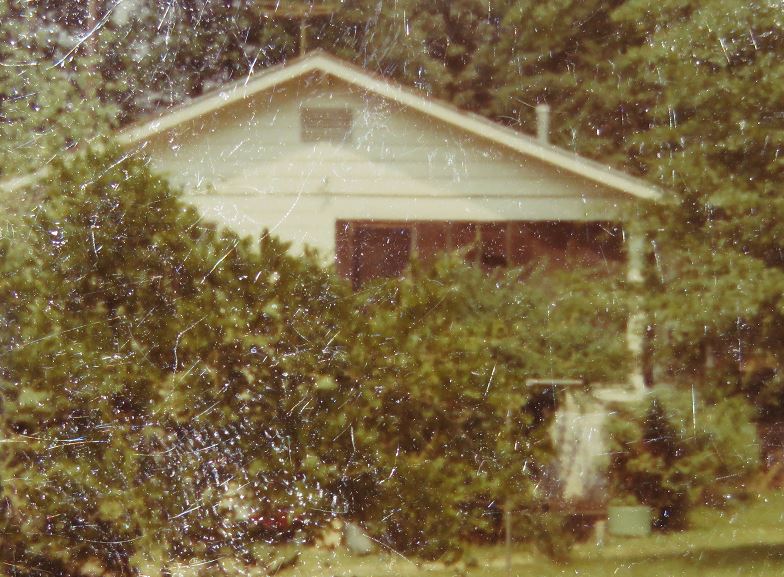
The house I grew up in on Macon Drive in Atlanta.
The 52 Ancestors theme this week is “the old homestead.”

When I saw the theme for this week was “the old homestead,” I immediately thought about my third great-grandmother Caroline (Hobbs) Lankford, who filed for and received a plot of land in Penfield, Greene County, Georgia under the Homestead Act in 1869. But I blogged about this in 2014 so didn’t want to repeat myself. You can read about Caroline here. I next thought about Grandpa and Grandma Lankford’s old home place in Penfield, but I shared the few memories I have of their home in a blog post about my Grandpa Carroll Harvey Lankford in 2016. You can read about Grandpa here. I went into more detail about their home when I blogged about our Lankford family reunions in 2015. You can read about them here. So, what homestead should I write about? I guess it’ll be the Atlanta home I grew up in.

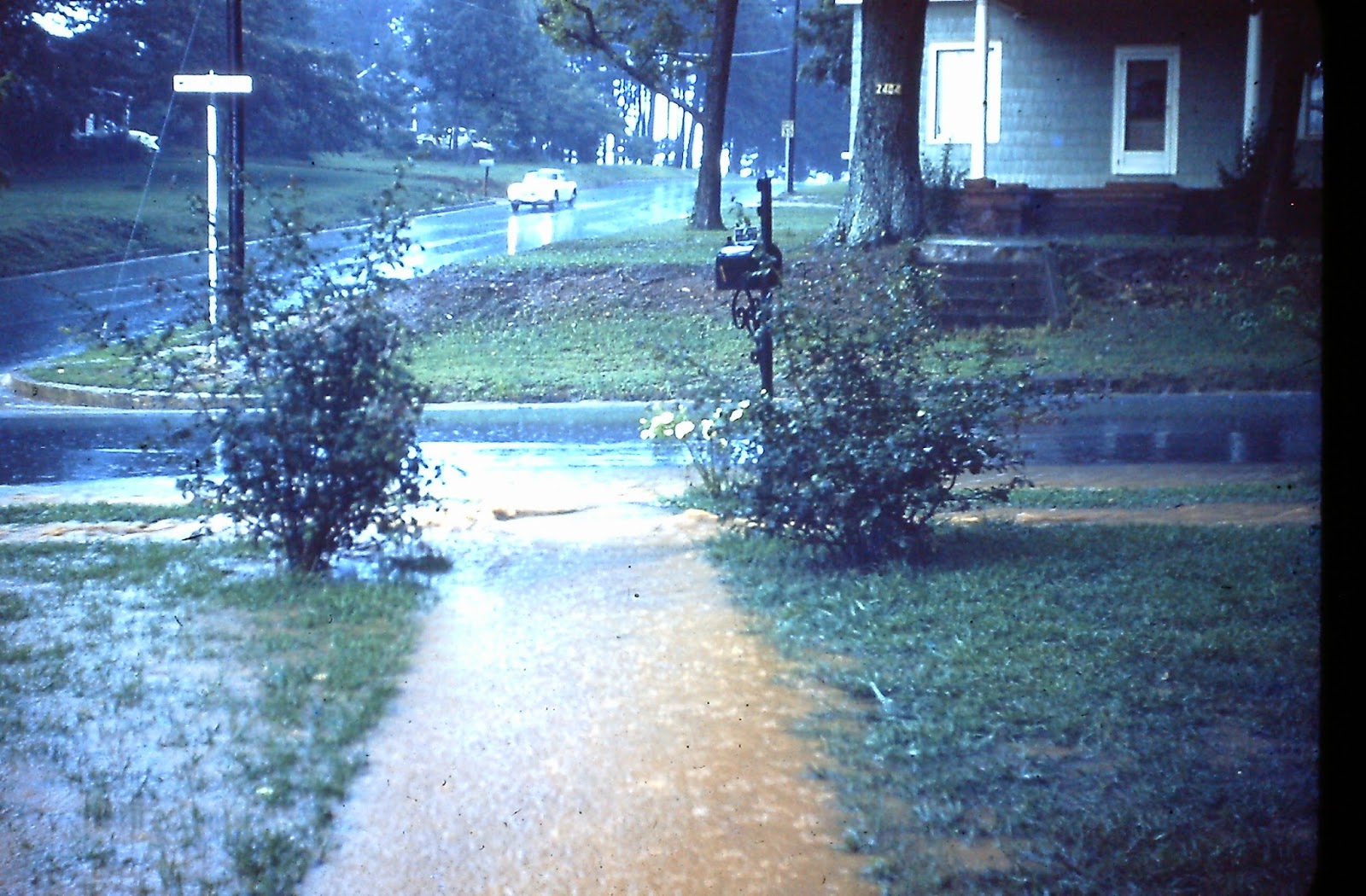
Front sidewalk during heavy rainfall. The roses were white.
I remember people stopping and asking if they could have a white
rose to wear on Mother's Day.

Shortly after I was born, my family moved from the West End neighborhood of Atlanta to a nice neighborhood on Macon Drive in southeast Atlanta. The house was your standard house, nothing fancy. The main level included a living room, dining room, small kitchen, two bedrooms, and a bathroom. The bottom level of the house was divided into two sections. One section had two bedrooms (one large and one small) and a laundry room; the other section was dirt and was where we stored tools, canned goods, and the normal junk people keep in their basements. When we first moved there, it was Daddy, Mama, and three children. But our family was still growing and within four years there were five children. At some point, my uncle Clark Lankford moved in with us so there were eight people living in the house and all with one bathroom! By the way, my Uncle Clark was like a father to us, even after he moved out of the house. I loved him dearly.

Furniture in the living room. I have the carnival glass vase on the left today. It
once belonged to my Grandma Lankford. One of my sisters has the statues in front


Front porch, after the remodel.
My brother Michael holding the cat that  was probably
named Kitty Wampus.
There was a front porch that went across the full length of the house (screened in during the early years if I recall correctly). Daddy eventually remodeled to extend the front bedroom out so we lost that half of the front porch. The house had a screened in back porch just off the kitchen. I remember Mama would go to the farmers market in Forest Park and bring home bushel bags of beans, peas, and corn and we’d sit on the back-porch snapping, shelling, and shucking. My sister reminded me that our fingers would be all purple when we were done shelling pink-eyed purple-hull peas. It wasn’t much fun but it was worth it. Mama would fill the freezer with squash, okra, peas, creamed corn, beans, and fruits. She’d can tomatoes, make soup mix, and I’m sure many other things that I don’t remember to store away for the winter months. We ate good! The kitchen had a laundry shoot near the back door that allowed us to drop dirty laundry directly into the laundry room. I remember my brother once tried to take the shortcut to the laundry room and got himself stuck in the shoot. He didn’t try that again.

View of the back screened-in porch
We had a piano in the living room and all of us took lessons at one time or another. Someone would usually have to play when visitors came. I took eight years of piano lessons but I doubt I could play chopsticks today. I love to hear someone playing a piano but it was just not for me.

I don’t know what the yard acreage was, but it always seemed large to me. There was a gravel driveway with space for several cars. Daddy built a patio near the back of the house that included a brick bar-b-que pit. I remember eating some finger lickin’ good ribs cooked on that pit. During the summer months, Mama often brought out the hand crank ice cream maker for some vanilla, strawberry, or peach ice cream. Daddy had a green thumb so we always had lots of color in the yard. And it wasn’t just flowers and bushes, we had fruit trees as well—cherry, pear, plum, apple, and even a banana tree. During the winter months, Daddy dug his banana tree up as well as a Bird of Paradise plant and transplanted both in the dirt side of the basement, in front of a window. Come spring, he’d move them back outside. One side of the house had a layered rock garden, anchored by a large rock against the side of the house. Every spring it had Thrift flowing over the rocks and in the summer, it was always filled with Day Lilies and Iris. That side of the house was lined with Baby’s Breath. At some point, Daddy started a vegetable garden in the backyard. It got bigger every year. Between his garden and the large farmers market in Forest Park, we had fresh vegetables and fruit on the table year-round.

Brother Michael on the big rock in the rock garden.

Brother Michael in the rock garden.
The Hamby's home in the background. Their son Douglas was killed in a
car accident while on military leave during the Vietnam War.
Mama's car in the background.

Hunting Easter eggs around the pear tree -- brother Michael, uncle Clark, and
sisters Vanessa and Bonita.

But our house wasn’t the only part of the homestead. It also included the outbuildings, in this case, our neighbors.

The house next door belonged to Mrs. Davis. She and her two adult children, Baxter and Elaine, lived on one side of the house. The other side of the house was Davis Grocery, a neighborhood mom and pop store. Her store was always stocked with milk, bread, canned goods, snacks, candy, ice cream, and the Coke cooler. On the nights Mama worked late, the store was already closed by the time she got home so Mrs. Davis would have us come to her back porch and to buy an evening Coke. It didn’t dawn on me until years later that drinking a Coke that late at night was probably why I had trouble falling asleep. I bought a lot of penny candy at Davis Grocery. In March, she always had kites for the neighborhood kids. I remember buying them and flying them from the hill on the side of her house. The corner where her house stood is empty today.

My brother Michael, sisters Vanessa and Jennifer, and me.
You can see Mrs. Davis' house in the background.

Neighbor Elaine Davis and sister Vanessa. Elaine went to
Panama City, Florida with us one time.

A good part of the neighborhood was made up of the Morgan and Newcomer families. Hazel Morgan lived next door to us. Her brother Charles Morgan and his wife Thelma lived next door to Hazel. Alice and Buddy Newcomer lived next door to Alice’s, parents, Charles and Thelma. Across the street were other members of the Morgan family—Raymond, Charles, Wayne, and Gene—all children of Charles and Thelma. They were a huge part of our lives.

Sisters Bonita and Vanessa standing in the front yard.
Hazel Morgan's house is next to ours; Charles and Thelma Morgan's next to Hazel's.
Alice and Buddy Newcomer once lived in the Charles Morgan house and Charles and Thelma lived next
door to them. At some point, they traded houses.


We also hung out with the Strickland, Rath, and Kingston families who all had children the same ages as the five of us. All three families were a huge part of our lives.

Celebrating someone's birthday with the neighborhood kids in our living room.
The house had a fireplace at one point. I only remember the mantel being there.

Sister Jennifer standing in the front yard.
You can see the house still had the full screened-in porch then. The house in the background belonged to the Raths.
Mrs. Rath eventually remarried so at that point, the Knights. The Rath house was on top of a large hill.
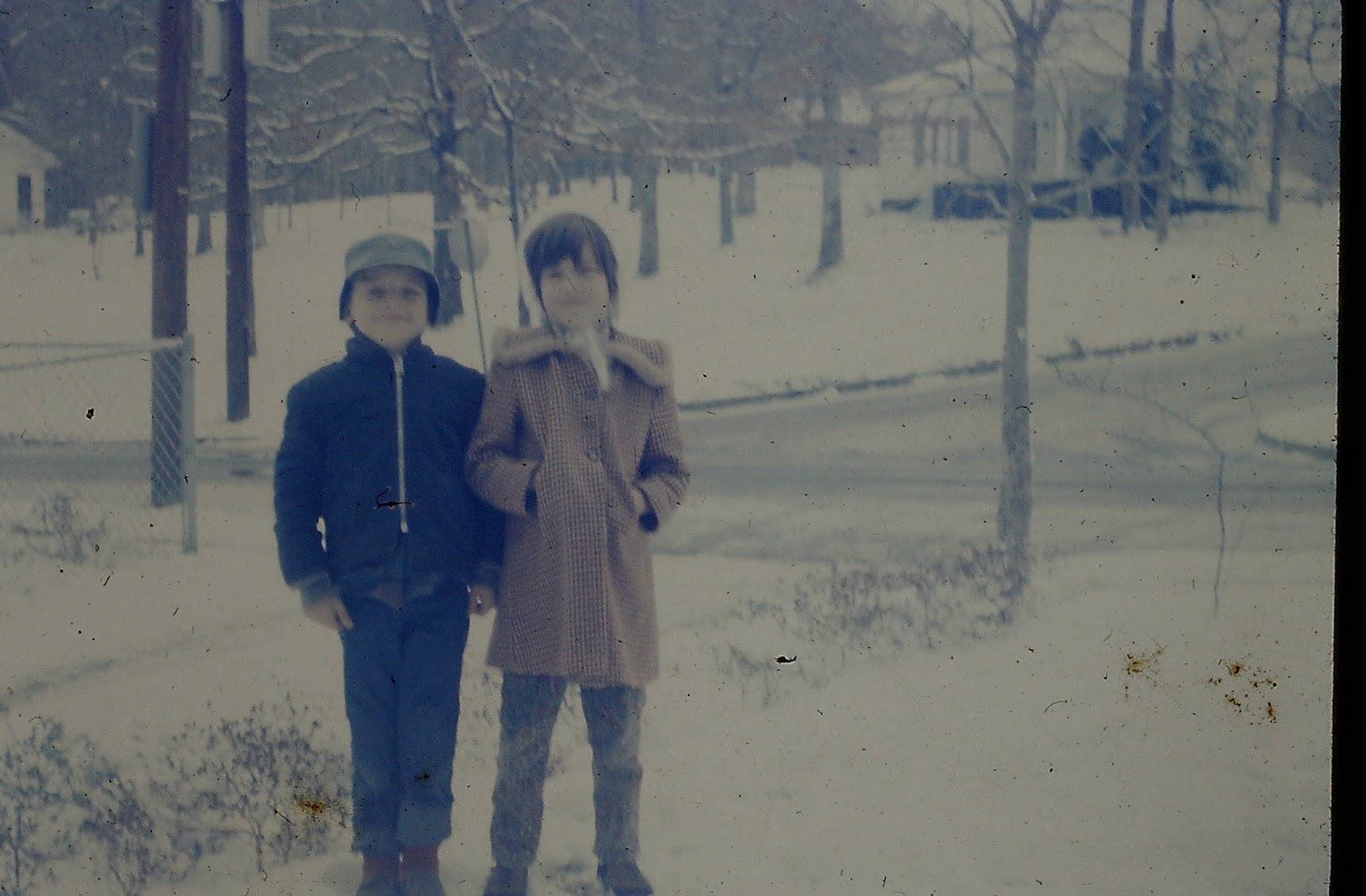
That was "the" place to go sledding when it snowed.

Bromack Drive was across the street, ending at Macon Drive. If you kept going, you’d go down our driveway. The road had a slight incline and I remember sitting at the living room window during ice storms, watching cars trying to make their way to the top of the incline. I still think about that today when I watch cars try to get up the small hill across from my house during snow storms.

Bromack Drive meets Macon Drive.
My brother Michael and I. You can see three of the Morgan houses in the background.

The Lakewood Fairgrounds were just over a mile from our house. Every fall, the Southeastern Fair came to town for at least a week, maybe two. The entire neighborhood gathered on Meadow Park Drive (the street that ran beside the Davis house and where the Strickland, Rath, and Kington families lived) to watch the fireworks show put on at the fairgrounds. We could see them above the trees from the side of Mrs. Davis’ backyard. That was always a fun time of the year. If you saw the Smokey and the Bandit movie, you would have seen the fairgrounds in the opening and closing scenes. In the second Smokey and the Bandit movie they blew up the old wooden roller coaster.

Our home in Atlanta was a great house and a great neighborhood and I have very fond memories of that time of my life. My husband and I have lived in our house (our starter house) for 37 years. I hope my sons feel the same way about our house years from now.


Photo of Southeastern Fair, Nan Peeples saved to MY HOMETOWN, Old Lakewood Fairgrounds.

Friday, March 23, 2018

Clara Bell White's misfortune

The 52 Ancestors theme this week is “misfortune.”

Clara Bell White, the daughter of Candler Milton White and Lenora Dean Lankford, was born on February 9, 1898 in Georgia, most likely Clarkston, DeKalb County. She was the oldest child of three—Clara Bell White, Charles Candler White, and Russell L. White. Clara would be my 3rd cousin 3x removed with our nearest common relatives being Nathan Lankford and Marion Caldwell who were married in Rutherford County, North Carolina about 1790.

In September 1899, baby Charles was born in Clarkston making Clara a big sister. The family still lived in Clarkston when the census enumerator visited on June 5, 1900. On that day, Clara’s parents had been married for three years. Her father made a living as a carpenter. Clara’s youngest brother Russell was welcomed into the family about 1902.

Sadly, Clara’s young life came to a tragic end on September 26, 1904 when she died after contracting tonsillitis in Clarkston at the age of six. Clara must have died early on the 26th as her death was reported in The Atlanta Constitution that same day. The news article noted that Clara was buried at Indian Creek Cemetery in Clarkston, however, Find-A-Grave has Clara’s burial location as Clarkston Cemetery and includes the photo used here. An Indian Creek Cemetery transcription found on the Georgia USGenWeb Archives Project website lists Clara’s parents but not her so perhaps there was a last minute change in cemeteries at the time of burial.

Had Clara been born today, the doctor would have prescribed antibiotics once she was diagnosed with tonsillitis and she probably would have recovered within days. Unfortunately, she had the misfortune of being born in 1898, long before penicillin was discovered in London in 1928 and first used on humans in March 1942.

References

1. The Atlanta Constitution, Atlanta, Georgia, September 26, 1904.
2. The real story behind penicillin, WETA PBS News Hour, September 27, 2013. 
3. Tombstone photo by Quietly Resting, Find A Grave Memorial 40237381.

Friday, March 16, 2018

Benjamin Smith's baby dress

The 52 Ancestors theme this week is “lucky.”

This beautiful baby dress once belonged to Benjamin Gordon Smith, my husband’s grand uncle. Ben was born in Apollo, Armstrong County, Pennsylvania on November 18, 1882 and was the first born child of John Milton Smith and Amanda Larimer Horne. He was an only child until his brother George was born on October 22, 1885.

In 2008, my father-in-law (Earl Murphy) was in declining health so he moved to an apartment near us. At the time, he still owned a house about 25 miles away. He and my mother-in-law (Mary Athya Murphy) purchased the house in 1981, planning to move there when he retired. Earl spent several years remodeling the house while still living in the family house. Once he was ready to retire, they sold the family house and moved to the retirement house. We helped them clean out the family house attic, which contained many boxes that hadn’t been opened in years. Those boxes were moved to the retirement house and placed in a cement block shed that stood beside the driveway where they would remain unopened for many more years.

Before her death, Mary told me several times that there was a program in the shed from Apollo’s 125th anniversary celebration in 1941. Because of this, and assuming there would be other documents, I knew it was important to go through every box when we  cleaned out the shed in the late 2000s. Having done a lot of research on the Smith family, I was on the lookout for the celebration program, which we found, along with many other documents that are gold to a genealogist. It turns out, the boxes contained items that had once belonged to my husband’s maternal grandmother, Bertha Edna Smith Athya and his maternal great-grandmother, Amanda Smith. I remember opening one cardboard box in particular. Inside the box were odds and ends as well as a dirty plastic bag. I could tell there was a piece of cloth wadded up in the bag but had no idea of what I was about to discover. When I opened the bag, I found this baby dress. My mother-in-law was the only person who would have known anything about the gown, but she had passed away in 2006. Lucky for us, Mary’s mother, Bertha, had written a note and placed it inside the bag with the dress. The note reads:
Uncle Ben Smith’s baby dress made by his mother about 1884. His birthday Nov. 16, 1882. Died Dec. 15, 1956. His mother Amanda Horne Smith.
Note found inside the bag with the baby dress, written by Ben's
sister Bertha Smith Athya. (Note: all records show Ben's birthday
as Nov 18, not 16).

Ben never married and lived with his mother Amanda for many years. It’s assumed that once the dress had met it’s needs, Amanda packed it away for safekeeping. I have no way of knowing if Ben ever took possession of the dress as an adult but I doubt it. My guess is it stayed packed away with his mother’s possessions until she passed away in 1943. Amanda was living with Bertha at that time so being the only girl in the family that survived, she took possession of the dress and it moved with her to Ohio after Amanda’s death. In 1949, Ben moved to the Elks Home in Bedford, Bedford County, Virginia where he died in 1957. Bertha was living with Mary when she passed away in 1979. Mary kept many of her mother’s belongings, the dress being one of them.

The 1880 census record shows that Amanda was employed as a dressmaker so it’s no surprise that she made this dress for her first-born child. She would have been 24 years old at the time.

Amanda and Ben Smith

After finding the dress, I brought it home and gently cleaned it with baby laundry detergent, then laid it flat to dry. I spent a Sunday afternoon looking for a baby hanger in the local shopping center and no one had anything appropriate for sale. I finally found one in a baby clothes display at Macy’s. I asked if they were for sale, which they weren’t. They had several laying around the cash registers though and one of the cashiers gave one to me.

The dress is 19 ½ inches in length and 10 inches wide at the waist. The material, which is very thin, is the color ecru. The dress has some damage—four small holes on the front skirt, two round holes on the back, and a long-frayed tear on the back. I see the beginnings of a small hole on one sleeve. Otherwise, it’s in fair condition.

The dress is about 134 years old and now hangs in my bedroom. Thank God Bertha left a note in the bag with the dress or we would have never known the history behind the dress.

Holes on the front skirt

Back of the dress

Back of the dress

Back arm tear

In 2014, I set a genealogy goal to document our family treasures. Although I’ve included this item in previous posts, I recently realized it needs to be added in the family treasures series so this post takes care of that.