Friday, November 11, 2016

George Alexander Merritt Sr. (106-2016)

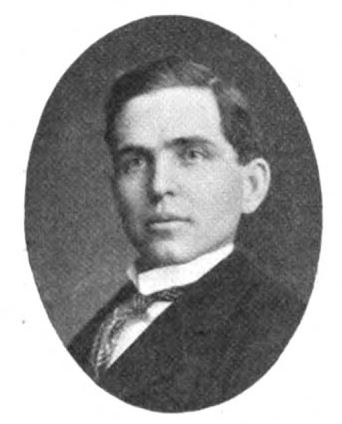
George Alexander Merritt Sr.*
George Alexander Merritt Sr., son of John C. Merritt and Louisa F. Burke, was born in Greene County, Georgia on November 27, 1862. Together they had six children—Cornelia Mary Merritt, William Charles Merritt, Eugenius J. Merritt, George Alexander Merritt, and two unknown children (the 1900 Greensboro, Greene County, Georgia census enumerator recorded Louisa Merritt as the mother of six children, four of which were living).

My connection to George is very distant—3rd cousin 3x removed of his wife.

On July 8, 1870, George and his family lived in Penfield, Greene County, Georgia. The census enumerator recorded George’s age as seven. His father was a farmer; his mother was keeping house.

On June 8, 1880, George and his parents lived in District 142 of Greene County. At age 18, George was still at school. His father was still farming; his mother was keeping house.

George’s father died in Greene County on February 18, 1886. He was buried at Siloam Cemetery in Siloam, Greene County, Georgia. George, along with his brother William, was named co-executor of his father’s will filed in Greene County. George’s father left him land, a buggy, buggy hire, and a bed.

Beginning in the fall of 1891, George left his home in Greensboro to enter the University of Georgia in Athens to study law. He was a member of the Demosthenian Debating Society. In his response to a University of Georgia alumni survey for a “Centennial Alumni Catalogue” being prepared for the school centennial in June 1901, George wrote “I wore home knitted stockings and paid my board promptly when due.” George graduated in the spring of 1892 with a Bachelor of Laws degree. He was admitted to the Georgia bar that same year and started practicing law in Greensboro. A public servant, George served two years on the Greensboro city council, was mayor of Greensboro for one year, and secretary of the Democratic county committee for several years.

On October 6, 1892, George married Lila O. Boswell, daughter of William J. Boswell and Josephine Malone, in Greene County, Georgia. Lila was from Penfield so it’s possible that’s where the ceremony took place. Exactly a year later, on October 6, 1893, Lila gave birth to a daughter they named Lila Boswell Merritt, born in Greene County. George’s life was shattered when nine days later, his wife died on October 15. Lila was buried at Penfield Cemetery in Penfield, Greene County, Georgia. She was just 25 years old at the time of her death.


Lila Merritt's tombstone, Penfield Cemetery

On June 13, 1900, a widowed George lived in Greensboro with his widowed mother and six-year-old daughter. He was enumerated as a lawyer.

Thirteen years after the death of his first wife, George married Temperance Estelle Davison, daughter of James McCluney Davison Jr. and Ella Martin Tiller, on June 5, 1906 in Greene County. The Atlanta Georgian reported their marriage on June 8, 1906:
MERRITT-DAVISON. One of the most beautiful weddings which ever occurred in Greensboro, Ga., was that of Miss Temperance Estelle Davison to Colonel George A. Merritt Tuesday afternoon at 4 o’clock at the Baptist church in that city. Before the ceremony Miss Marie Barnhart sang “Harts and Flowers,” after which the bridal party entered to the strains of Mendelssohn’s wedding march, played by Miss Nellie Hall. The ribbon-bearers, little Misses Norme Little and Sammie Gheesling, with long ribbons of tulle formed an aisle, down which the bridal party walked. First, Miss Kate Evans and Mr. Wade Durham, of Woodville; Miss Carrie Davison and Dr. E. G. Adams, Miss Addie Copelan and Colonel J. P. Brown, Miss Willie May Tappan and Mr. Luther Smith. Then the little flowers girls, Sara Hall and Marion Park, immediately preceded the bride with her matron of honor, Mrs. Mercer Reynolds, down the middle aisle, while the maid of honor, Miss Frances Adams, going down the right and the best man, Colonel James Davison, with the groom, down the left aisle. The ceremony was performed by Rev. A. F. O. Kelley. The bridesmaids wore pink and white dresses with pink sashes and white hats and carried arms full of pink and white sweet peas. The matron and maid of honor wore white dresses and hats and carried pink and white sweet peas. The bride’s beautiful wedding gown was of soft white point d’esprit over taffeta, made princesse, with a great deal of hand work on the corsage. Her going-away gown was of gray voll made with an eton coat, which she wore over a lingerie blouse. Mrs. Merritt is the youngest daughter of Mrs. Ella Davison and is greatly admired. Colonel Merritt is one of the best known lawyers in the county and has many friends throughout the state. The young couple left on the afternoon train for Tallulah Falls, where they will spend several weeks. Among the out-of-town guests present were: Mr. Wade Durham, Mrs. William Cartwright, Mrs. R. E. Davison, Mr. Jim Armstrong, Mrs. Floyd, Mr. J. H. Bowles, Mrs. C. C. Davison, Miss Annie Davison, Misses Young, of Woodville; Mrs. J. B. Davison, of Atlanta; Mr. and Mrs. Ed Lewis, Misses Annie Lou Tappan, Carrie Merritt, Mr. and Mrs. Charlie Merritt, of Siloam; Mr. and Mrs. Genie Merritt, of White Plains; Misses Newsome, Hart, Sibley, Mrs. Richards, Mrs. Elizabeth Thornton, of Union Point; Mrs. Charlie Sanders, Mrs. Lelch, Miss Colclough, Miss Calloway, of Penfield.


By all accounts, it was a beautiful wedding. The following year, 1907, George and Estelle welcomed a son they named George Alexander Merritt Jr.

George announced his candidacy for the legislature on March 4, 1910. The Athens Banner noted him on March 5 as “one of Greene’s most prominent lawyers …”

George’s wife Estelle died suddenly in Greensboro on September 24, 1912. She was buried at Greensboro City Cemetery in Greensboro. The Atlanta Constitution ran a death notice on September 25, 1912:
Mortuary—Mrs. G. A. Merritt, Greensboro. Greensboro, Ga., September 24.-(Special.) Mrs. George Merritt, wife of Colonel G. A. Merritt, prominent lawyer and member of the state legislature, died very suddenly at her home here this morning. Mrs. Merritt was one of the most popular young matrons of the city. She is survived by her husband, one young son, her mother, Mrs. Sarah Davison; one brother, Colonel James Davison, of Greensboro; and one sister, Mrs. Mercer Reynolds, of Chattanooga, Tenn. The funeral will take place from the Methodist church, of which she was a devoted member, tomorrow afternoon at 3 o’clock. Interment at City cemetery.
Although the news article doesn’t mention a daughter, I believe Estelle probably died in childbirth as her tombstone reads:
Temperance Estelle Davison
Wife of George Alexander Merritt
Mar. 19, 1879
Sept. 24, 1912
And Their Infant Daughter
Estelle Merritt and daughter's tombstone, Greensboro City Cemetery

George was elected Ordinary of Greene County on January 23, 1913. The Atlanta Constitution reported on the election on January 24, 1913:
Col. Merritt Elected Ordinary of Greene, Greensboro, Ga., January 23.-(Special.)—The special election to fill the vacancy caused by the death of the late Judge James H. McWhorter occurred Tuesday. There was very little interest taken in the election, there being a light vote case over the county. Colonel George Merritt received the most votes and will be Greene's next ordinary. Mr. Merritt has twice represented this district in the legislature and is very popular here. His friends are congratulating him on his election to this office.
Sadly, three years later George took his own life on January 13, 1916. The Athens Banner reported his death on January 14:
Took Own Life—Ordinary of Greene County Died Yesterday Morning By His Own Hand (Special to the Banner.) Greensboro, Ga., Jan. 13.—George A. Merritt, ordinary of Greene county and prominent lawyer, killed himself at 7 o’clock this morning with a shotgun. The load entered near the heart. He served in the Georgia legislature terms of 1913–14. He leaves one daughter, Miss Lila Merritt, who is a teacher in the public school at Albany, Ga., and one son, George A. Merritt, Jr. Mr. Merritt appeared among friends as usual yesterday and no reason at this time can be assigned for his act.
The Atlanta Constitution reported his death on January 14 as well:
G. A. Merritt, Prominent Greene County Official, Ex-Legislator, Suicides, Greensboro, Ga., January—(Special.)—Hon. George A. Merritt, ordinary of Greene county, killed himself this morning at 7 o’clock at the home of his cousin, Mrs. Ava Young, with whom he resided. He used a shotgun, placing it against his heart. The load went entirely through his body. He was breathing his last when his cousin, who heard the report of a gun, went in to investigate. No cause is assigned for the rash deed except that he possibly brooded over his financial condition until his mind became unbalanced. Mr. Merritt was 54 years old, and was a man of sterling qualities, beloved by all who knew him. He was one of the most prominent attorneys in the legislature in 1913–14. His mother, who is 86 years old, is completely prostrated by the shock. A gloom is cast over the entire community. Besides his mother, Mr. Merritt is survived by a sister, Mrs. Tappan, of McRae, Ga.; a brother, Charles Merritt; a daughter, Miss Lila, who is a teacher in the public schools at Albany, Ga., and a son, George A. Merritt, Jr. 
A casket and vault were purchased from McCommons-Thompson-Boswell Company for $35 each on January 14. George was buried at Greensboro City Cemetery in Greensboro. George’s tombstone was engraved with a birth year of 1861, however, he recorded his birth year as 1862 in the University of Georgia alumni survey for their “Centennial Alumni Catalogue” in 1901. Census records also indicate his birth year was 1862.

George Merritt's tombstone, Greensboro City Cemetery

I’ve noticed in several news articles that George was listed as a Colonel yet when he submitted the University of Georgia alumni survey, he responded “none” to the line requesting dates of military service, name of commands, and office held.

George was a member of the Methodist Episcopal Church South.


* Photo of George A. Merritt is from Georgia: Comprising Sketches of Counties, Towns, Events, Institutions, and ... edited by Allen Daniel Candler, Clement Anselm Evans

Saturday, November 5, 2016

Mary Daisy Davison (105-2016)

Baird's Baptist Church, Bairdstown, Georgia
Bairdstown Cemetery, located in Oglethorpe County, Georgia, is the cemetery where my paternal grandparents, several uncles, and an aunt are buried. It’s a beautiful, well-kept cemetery near Baird’s Baptist Church. Daddy’s sister lived just down the road from the cemetery so we’d always stop by when we visited her and take a walk through the graves. I remember Daddy telling me one time that we were related to many of the people buried there, although he didn’t know how. It’s been a while, but several times on my yearly trips home to Atlanta, my husband, Daddy, and I took a day trip to Greene and Oglethorpe Counties to visit the many cemeteries to document my research. Daddy enjoyed these trips and would spend the day telling us stories about his childhood there. My boys were young at the time and had no desire to walk the cemeteries with us so I always made sure they had new Gameboy games to play with and then I would bribe them. Yes, I said bribe! I told both if they would behave all day while we made the rounds to the cemeteries I would give each of them $25 at the end of the day. But, if they acted out, the deal was off. I had to pay up every time and it was worth every penny! I enjoyed these day trips immensely and we always made it a point to stop by Bairdstown Cemetery. By then, the walks took on new meaning because I had started to connect the dots from my family to the people buried there. I found that Daddy was right—we in fact had many collateral connections there. This blog post is about one of those connections—Mary Daisy Davison. A relationship calculator tells me that she and I are 3rd cousins, 3x removed with our nearest common relatives being Robert L. Hobbs Sr. (1754–1845) and Mary Marion Caldwell (1759–1853). They were my 5th great-grandparents.

Bairdstown Cemetery, Bairdstown, Georgia
Mary Daisy Davison, daughter of Col. Joseph Davison and Susan C. Briscoe, was born in Greene County, Georgia on December 22, 1874. She was the oldest child of seven—Mary Daisy Davison, Joseph Briscoe Davison, Sarah Elizabeth Davison, Ralph C. Davison, Evelyn C. Davison, and two infant children (sex unknown). She went by Daisy.

On June 14, 1880, five-year-old Daisy and her family lived in the 138th District of Greene County, Georgia. She was enumerated as Mary D. Davison. Her father was the postmaster; her mother was a housekeeper. There were three servants living in the home with them—Eliza Bearer (age 22, cook), Henry Towns (age 30, laborer), and Jordon Raiden (age 60, laborer). 

Daisy’s life was cut short in 1887 when she came down with dysentery. At the age of 12, she died in Woodville, Greene County, Georgia on May 4, 1887. The Atlanta Constitution reported her death that same day: 
Death of Miss Daisie Davison. Woodville, Ga., May 4.—[Special—Colonel and Mrs. James Davison lost their elder daughter, Miss Daisy, aged about thirteen years this morning, at 4 o’clock, with dysentery. The funeral services will take place at their residence tomorrow at 9 o’clock, conducted by Rev. M. W. Arnold, of Harwood, Ga., after which her remains will be taken to Bairdstown, Ga., for interment.
Davison plot, Bairdstown Cemetery

Daisy is buried in the Davison family plot at Bairdstown Cemetery. Her tombstone reads: 
IN MEMORY OF
MARY DAISY DAVISON.
BORN DECEMBER 22, 1874.
DIED MAY 4, 1887.
SWEET BE THY SLEEP
UNTILL HE WHO RENT
THE GRAVE.
SHALL COME FOR THEE.
AND ON THY CHEEK
THE BLUSH IMPRINT OF
IMMORTALITY.

Daisy's tombstone


Friday, October 28, 2016

Daddy’s quilts

The cooler weather we’re having (well it was cooler when I started writing this) means it’s time to put another blanket on the bed. My go-to blanket is always one of the quilts my Daddy made. He’s 90 years old now and spends his days in a nursing home but in his late 50s and 60s, he made a lot of quilts. Daddy was a plumber by trade but spent his downtime in the yard. We always had a beautiful yard and he just got better at gardening over the years. I’ve said many times that the yard at his last house could have been featured in a magazine. I wish I could say I inherited his green thumb, but I can’t. My youngest sister did but I wasn’t so lucky. During the 1980s and 1990s, Daddy started making quilts during the winter months when it was too cold to work outside in the yard. He got pretty good at quilting as well and for a while, cranked out a lot of them. I asked him yesterday who taught him how to make quilts and he said he taught himself.

The first quilt Daddy shared with me was one he made for my oldest son in the late 1980s. That quilt was smaller than a standard size bed but perfect for a growing boy. My son loved the quilt and still has it to this day. I believe it was one of the first ones Daddy made and was stitched by hand. He eventually used a sewing machine to make the quilts.


For quite a few years, Daddy gave me a new quilt every time I’d go home to Atlanta or when he’d come to Virginia to visit us. I have enough quilts to keep for myself and to share with both of my boys.


The quilt below is one my oldest son confiscated from my collection many years ago. It was too heavy for me so I didn’t mind. As a matter of fact, he brought it with him to Atlanta this week and as he walked into Mama’s house, he asked her if she cared if he brought Paw Paw’s quilt in the house (they divorced years ago). He said it was his favorite blanket.


I’ll always treasure Daddy's quilts.

Friday, October 21, 2016

Henry T. Burnette (104-2016)

Henry T. Burnette, son of Thomas Terrell Burnette and Elizabeth Jones, was born on May 11, 1908 in Greene County, Georgia. He was the 10th child of 13—Luther Terrell Burnette, Eva Drucilla Burnette, Floria Mae Burnette, Jesse Burnette, twin to Jesse, Willie Loyd Burnette, Prince Albert Burnette, Claudia Burnette (twin), Maudie Burnette (twin), Henry T. Burnette, Eleanor Estelle Burnette, Samuel A. Burnette, and Julia Virginia Burnette. His material grandfather and great-grandfather were both named Henry so it’s a good chance he was named for one or both of them. It’s also a good chance his middle name was Thomas or Terrell after his father but I haven’t been able to find any record that lists anything other than the initial. Henry was my great uncle.

About 1908, Henry and his family attended the Henry Jones family reunion in Walton County. He is number five in the reunion photo—sitting on his mother’s lap.

Henry Jones family reunion -- Henry is #5

Thomas Terrell Burnette family photo taken at the Jones family reunion.
Henry is sitting in his mother's lap. My grandmother Floria is standing to the left behind her mother.
         
On April 28, 1910, Henry and his family lived in Greshamville, Greene County, Georgia. His father was a farmer. The enumerator recorded his mother as having had 10 children, 8 of which were living. She had lost a set of twins—one I know was a boy. Unfortunately, I don’t know the sex of the other child who had already died by the time the census record was taken.

By February 13, 1920, Henry’s family had moved to the Walkers District of Greene County where they would stay. His father was farming on a general farm; his mother was enumerated as Lizzie. There were 10 children living in the home. Henry’s paternal grandfather, Samuel Pride Burnette, 78 years old and widowed, had moved into the home after the death of Henry’s grandmother. Henry’s brother Luther and his wife Etta Belle lived next door.

On April 14, 1930, the family still lived in the Walkers District. Only three of children were living in the home now—Henry, Sam, and Julia. Everyone in the house was able to read and write. Luther and his family still lived next door and had added two daughters to their family—Hazel and Francis. Henry’s father was still farming and now had Henry as a helper.

Henry’s father died at age 71 in Greensboro, Greene County, Georgia on February 6, 1940. He was buried at Walker United Methodist Church Cemetery in Greensboro. His death certificate listed the cause of death as chronic myocarditis, an inflammation of heart muscle. On April 26, 1940, Henry, his widowed mother, and his sister Julia lived on Veazey Road in the Walkers District. His mother wasn’t working but both Henry and Julia were laborers on a farm. Sometime in the early 1940s, Henry left Greene County and moved to Putnam County, Georgia.

I haven’t found a marriage record yet but sometime after March 1944, Henry married Mattie Bell Lankford, daughter of George Washington Lankford Sr. and Jessie Burton, and a native of Greene County. Mattie had previously been married to James Homer Mull, son of Horace and Vista Mull. Mattie and Homer had at least four children between 1925 and 1939—James Mull, Julius Yancey Mull, Dorothy Mull, and Eugene Mull. On March 15, 1944, Mattie and Homer were involved in a car-bus accident in Putnam County. Homer was killed instantly. Mattie survived but suffered serious injuries to her forehead and arm and was taken to Macon Hospital. To my knowledge, Henry and Mattie never had children of their own.

Photo by Patty Shreve - Find A Grave Memorial# 79323026
On New Year’s Eve, December 31, 1955, Henry and a “companion” named John W. Welch, were hunting in Putnam County when Henry was accidentally killed by a .22 rifle. According to a news article published on the front page of The Eatonton Messenger on January 5, 1956, Henry and John were squirrel hunting when John heard a gunshot. John called to Henry but received no response so climbed out of the tree he was in to check on Henry. John found Henry, who had been shot in the head “just above his left ear,” lying on the ground, already dead. Two men from Jasper County were fishing nearby in Murder Creek and helped John carry Henry out of the woods. John reported that he didn’t know what caused the gun to shoot. The Eatonton Messenger wrote that Henry was Putnam County’s “first hunting fatality of the year on the last day of 1955.” Mr. I. A. Carter, the local coroner, held a jury inquest at the Vining Funeral Home where they ruled Henry’s death an accident. Henry was buried at Pine Grove Cemetery in Eatonton after a service held at Oak Street Baptist Church. He was working at the local aluminum plant at the time of his death. On January 5, 1956, Mattie published a “Card of Thanks” in The Eatonton Messenger which was signed "Mrs. H. T. Burnette and The Mull Family.

I didn’t know much about Henry when I started writing this blog post but that’s part of the fun of doing genealogy research. I’d been told that Henry had lived and was buried in Putnam County, that he was married to a woman (name unknown) who was either widowed or divorced, and that she had a son (name unknown) who was with Henry on a hunting trip when he was killed. Because I knew so little about Henry, I had a lot of questions:

  • What was his actual birthdate?
  • When did he move from Greene County to Putnam County?
  • Who was his wife?
  • Did he have children of his own? 
  • When did he die?
  • Was he really killed in a hunting accident?

Well, it took a lot of digging but I finally figured it all out. And, I got a surprise connection to the Lankford family in the process.

Finding the Eatonton Messenger news article reporting Henry’s death got the ball rolling and confirmed that he was in fact killed in a hunting accident. But now I had more questions:

  • Who was John Welch?
  • Was he Henry’s stepson?
  • Who was the Mull family mentioned in the “card of thanks?”

I looked in my family tree file to see if I had anyone with the Welch or Mull last names. I didn’t. I then checked census records for those families but couldn’t make a connection to Henry. I searched the Eatonton newspapers again to see if there were other articles that might shed some light on these people. Still nothing. I finally found the social security record that listed Mattie Bell Lankford and all of her last names (maiden and two married names) as well as the names of both of her parents. Bingo! Her parents were George Lankford and Jessie Burton—two names I immediately recognized. I went back to my family tree file and there she was—a daughter named Mattie Bell Lankford. I later found Mattie’s obituary that listed her full name as Mattie Bell Lankford Mull Burnette. The 1940 census record listed Mattie’s son as Julius Y. Mull. Another news article connected Julius to his mother—Mrs. Henry Burnette. And finally, Julius’ obituary listed his sister as Mrs. Dorothy Welch. So there was the Welch connection. It all started to fall into place and was making sense now.

The Lankford connection was Mattie’s grandfather—Curtis Caldwell Lankford—who was the brother of my third great-grandfather, James Meriweather Lankford.

Although Henry’s life story had a sad ending, it was fun to research. My thanks to the Digital Library of Georgia for sharing the newspaper archives via the Uncle Remus Regional Library System with the world. I wouldn’t have been able to figure this out without this resource.

Friday, October 14, 2016

William Harrison Holland (103-2016)

Harrison's grave at Neal's Creek Baptist Church Cemetery
William Harrison Holland, son of Leroy Thomas Holland and Amanda Elizabeth Scott, was born in Anderson County, South Carolina on February 21, 1866. He was the 5th child of 11—Eliza Ann Holland, Marion Scott Holland, John Newton Holland, Thomas N. Holland, William Harrison Holland, John Louis Holland, Brown Lee Holland, Maggie Idora Holland, Elijah Jeffers Holland, Andrew Turner Holland, and William Charles Holland. Harrison also had three step-brothers from his father’s second marriage to Cindarilla Darliska Amanda Hall—Aaron Hall Holland, Lawrence Lafayette Holland, and Joseph Norris Holland. He went by Harrison and was my great grand uncle.

On January 21, 1868, Harrison was nearing his second birthday when his mother had her sixth child—a boy they named John Louis. Sadly, John only lived for six months and died on June 26. He was buried at Neal’s Creek Baptist Church Cemetery in Anderson.

On July 8, 1870, Harrison and his family lived in Broadway, Anderson County, South Carolina. His father was a farm laborer and his mother was keeping house. Less than two years later, Harrison’s seven-month old sister Maggie died on March 1, 1872. She was buried at Neal’s Creek Baptist Church Cemetery in Anderson. Harrison was only seven years old when he experienced death for the third time when his 12-year-old brother Thomas died on October 22, 1873. He was buried at Neal’s Creek Baptist Church Cemetery in Anderson. And then the worst of all happened—Harrison’s mother Amanda, who was just in her mid-30s, died on December 18, 1877. I don’t know what caused her death but you certainly can’t rule out a broken heart after losing several children. Amanda was buried at Neal’s Creek Baptist Church Cemetery in Anderson along with the four children who died before her (she lost a son—John Newton Holland—in 1860 before Harrison was born).

It took less than two years before Harrison had a step-mother. After all, his father needed help raising his remaining children. On August 3, 1879, Leroy married Cindarilla Darliska Amanda Hall, daughter of Aaron Hall and Clementina Norris Hall, at the old home place in Anderson County.

On June 1, 1880, Harrison, his father, step-mother, and brothers Brown, Elijah, Andrew, and Charles lived in Broadway, Anderson County, South Carolina. He father was a farmer who couldn’t read or write. The fall of 1883 brought death again to the Holland family when Harrison’s oldest sister Eliza died at the age of 27 on September 10. She was buried at Neal’s Creek Baptist Church Cemetery with her mother and siblings.

Things settled down for a few years and Harrison immersed himself in his church and community. Sadly, as was the fate of his siblings who had passed away at a young age, so too would he. Harrison died in Broadway Township of Anderson County on March 26, 1890. The Anderson Intelligencer published his obituary on April 3, 1890: Mr. W. Harrison Holland, son of Mr. L. T. Holland, died at the home of Maj. J. N. Vandiver, in Broadway Township, on Wednesday afternoon, 20th ult. He had been sick several weeks with pneumonia. Mr. Holland was about 25 years of age, and truly a model young man. At the age of 16 years he joined the Neal’s Creek Baptist Church, and up to the day of his death was a devoted and consistent member. For the past three years he has faithfully served as Superintendent of the Neal’s Creek Sunday School. Four years ago he became a resident of Maj. Vandiver’s family, having hired to that gentleman as a farm hand, and so faithful was he in all of his duties that from year to year, without solicitation on his part, his salary was increased. Mr. and Mrs. Vandiver were very much attached to the young man. Besides his farm work he gradually developed into a house builder, and was the architect and builder of many small houses. Last fall he built a commodious residence for Capt. T. W. Martin, finishing it from ground to roof-chimneys, painting, &c. —with but little of other help—in one hundred days. He did his duty in everything he undertook, and has gone to reap his reward in a brighter world. His remains were interred in the Neal’s Creek Church yard on the day following his death. Rev. M. McGee conducting the funeral services.

Anderson Intelligencer article, April 3, 1890
On April 3, 1890, The Anderson Intelligencer published the following news item: The Union was informed that the Superintendent of two of the schools had recently passed away—Mr. L. B. Haynie, of Bethany School, and Mr. Harrison Holland, of Neal’s Creek School. Rev. G. M. Rogers was called on for a speech on the life and character of Mr. Hayne, and Rev. R. M. King was asked for a similar speech on the life and character of Mr. Holland. Both gentlemen responded promptly, showing the worth of such men, and the great loss the Church and Sunday School had sustained by their death. After these speeches the Union was led in prayer by Rev. R. W. Burts, asking for God’s blessing upon those schools deprived of their leaders.

Ten days after Harrison’s death, his brother Brown Lee Holland, died on April 5, 1890. The Anderson Intelligencer published the following on April 10: Last week we chronicled the death of Mr. Harrison Holland, which occurred on the 25th ult., and now it is our sad duty to note the death of his younger brother, Mr. Brown Holland, who died last Saturday afternoon at the home of Mr. A. A. Carpenter, in Broadway Township. He had attended the bedside of his brother very closely during his illness, and on Sunday after the latter was laid away in the grave, he was stricken down with pneumonia, which gradually grew worse until death came. Mr. Holland was about 21 years of age, and was an upright, worthy young man, whose death is deeply regretted by a wide circle of friends. His remains were laid to rest by the side of his brother in the Neal’s Creek Churchyard on Sunday afternoon, Rev. C. B. Smith, of this city, conducting the funeral services.

On May 1, 1890, The Anderson Intelligencer published a “Card of Thanks” written by Harrison’s father: Mr. Editor: I desire to publicly return my sincere thanks to the kind friends and neighbors who so kindly attended the bedside of my sons, Harrison and Brownlee Holland, in their recent illness and death. I assure each and every one of them that their kindness will never be forgotten. L. T. Holland.

Saturday, October 8, 2016

Who is this child? That is the question.

Last year, my husband visited his Aunt Jean Murphy in West Virginia and while there, she gave him this real photo postcard. Unfortunately, she said she didn’t know who the baby was in the photo, which was taken at Brinkmier’s Art Lobby on 1414 Market Street in Wheeling, West Virginia. The postcard is clipped on one corner, bent on the other three corners, has a large “18” written on the back, and is browned and stained. It’s definitely seen better days. But the photo of the baby is beautiful. One corner of the baby’s hair looks pink so you might think there’s a bow there, but it’s just a stain.

I’m always on a quest to identify unnamed photos so when I came across this photo recently, I started thinking about who this baby might be. Aunt Jean was married to Ralph Murphy, my father-in-law Earl’s oldest brother. Their mother, Dessie Church, died in 1940 when Earl was just 12 years old. Their father, Charles Homer Murphy, who was in ill health and I’m told an alcoholic, died in 1949. Uncle Ralph basically became the father figure of the family and most likely ended up with many of his parent’s possessions. Thinking along those lines, I began to think the photo might be Uncle Ralph so I pulled out a younger picture of him to compare. I decided the baby wasn’t Ralph though, his hair was too wavy.

Then I remembered another photo from the Murphy family photo collection—a baby sitting in Charles and Dessie’s lap. When Earl gave us a copy of this photo, he told us that he was the baby in this photo.

Charles and Dessie (Church) Murphy of Wetzel County, West Virginia

To me, it looks like the same baby when I see a side-by-side comparison of the two photos. The hair is very similar--parted and combed the same way. I asked one of my husband’s Murphy cousins what she thought and her response was “Strong resemblance, but there has always been a difference of opinion as to which of the five kids is in that family portrait. More “votes” for Earl than the others.”


Back of the photo postcard

A few more Murphy family pictures:

Earl Murphy, ca. 1930. He would have been about two years old.

Ralph Murphy -- not a baby picture but you can
see he had very wavy hair. The part is also in a different place.

Dessie (Church) Murphy and four of her children -- Evelyn, Glenn, Earl, and Raymond. 

Dessie (Church) Murphy holding Earl, Evelyn, Glenn, Earl, and Raymond

Dessie (Church) Murphy hold her youngest son Earl


What do you think? Same baby or not? I’d love to hear from others on this one.

Saturday, October 1, 2016

Aaron Hall Holland

Aaron Hall Holland, son of Leroy Thomas Holland and Cindarilla Darliska Amanda Hall, was born in Belton, Anderson County, South Carolina on June 10, 1880. He was the oldest child of three—Aaron Hall Holland, Lawrence Lafayette Holland, and Joseph Norris Holland. Aaron also had 11 step-siblings through his father’s first marriage to Amanda Elizabeth Scott—Eliza Ann Holland, Marion Scott Holland, John Newton Holland, Thomas N. Holland, William Harrison Holland, John Louis Holland, Brown Lee Holland, Maggie Idora Holland, Elijah Jeffers Holland, Andrew Turner Holland, and William Charles Holland. He was given his mother’s maiden name as his middle name.

Much of the information in this blog post was taken from a letter written by Aaron Hall Holland in 1964 detailing his Hall/Holland family history. Aaron was 84 years old at the time he wrote the letter.

Death shook the Hall/Holland family early in Aaron’s life. His grandfather, Aaron Hall, died in South Carolina on February 5, 1883. He was buried at Flat Rock Baptist Church Cemetery in Anderson. Three of Aaron’s siblings were taken by death far too early—his sister Eliza at the age of 27 on September 10, 1883. She was buried at Neal’s Creek Baptist Church Cemetery in Anderson; brothers Harrison (age 24) and Brown (age 21) in the spring of 1890. All three were buried at Neal’s Creek Baptist Church Cemetery.

I’ve written several times about the hardships the Holland family went through during the early 1890s so won’t go into detail here. You can click on the links to Aaron’s parents or siblings above to read more about their struggles. Bottom line is his father Leroy, a farmer, struggled to support his family in South Carolina so around January 1891 moved the family to Dalton, Whitfield County, Georgia where a friend of his lived. Unfortunately, a year after moving to Georgia, Leroy died of pneumonia on May 4, 1892 in Beaverdale, Whitfield County. He was buried at Deep Springs Baptist Church Cemetery there in Whitfield County.

In 1893, the barn that held all of the Holland’s corn, cotton seed, and fodder burned down, leaving them with nothing. Aaron’s aunt (his mother’s sister), Permelia Ann Harriett (Hattie) Hall Welch, her son Edwin Parker Welch, and neighbors Mr. and Mrs. Patterson stepped in and helped them out.

With a little nudging from Aaron’s uncle Lawrence Peak Hall, Aaron, his mother Amanda, and brothers Lawrence and Joe moved to Italy, Ellis County, Texas on January 8, 1895 with $45 in cash and practically nothing else. Peak told them if they would move to Texas, he would furnish all of their food free of charge and they could have a house and half of all they could produce. They lived with Peak’s family for a short time and then moved into a four room house and started farming again. They rented 30 acres of land from Peak, worked hard, and raised a good crop. As agreed, they gave Peak half. Aaron would later write “this sounds like we were fed free, but this was not the case.” As the oldest, Aaron had to work every day he was not needed to work their own crop. He repaired fences, cut wood, and helped his cousin Britain Hall build a barn. This apparently went on for three years—1895, 1896, and 1897. Aaron said he was never offered a cent for his work.

Aaron’s Uncle Peak was unhappy with the way his father’s (Aaron’s grandfather Aaron Hall) estate was handled after his death and tried to force Aaron’s mother Amanda to “buy two old mules, farming tools, and to rent more land on a third and fourth basis.” Uncle Peak wanted too much money for these things and Amanda wasn’t interested. Because of this, in January 1898 she moved the family off of Peak’s land to land in the Hard Neck neighborhood owned by Jonny Couch. They had a good crop the next harvest but were unable to pick all of the cotton due to “lack of help.” Because they couldn’t gather all of the crops, Mr. Couch refused to rent land to them a second year so that summer they started looking for land for the year 1899. They ended up getting land that Uncle Peak had looked into buying but the deal didn’t suit him so he turned it over to Amanda. Now the Holland’s were on the move again, ending up on a flag stop at Dairy Station in Alief, Harris County, Texas, 15 miles west of Houston, Harris County, Texas. The land was unsettled—no roads, nothing but grass—but it had plenty of water. With the help of Aaron’s cousin Britain Hall, they built a small house, fences, and prepared the land for crops. They finished all that work and then headed back to Italy to harvest the crops they had left behind. They paid Mr. Couch one third of what they made on the crops and then loaded their mules, cows, shelled corn, baled oats, and furniture and took the train back to Dairy Station, arriving on January 8, 1899. Aaron road in the box car to watch the stock on the trip. Once back in Alief, they stored the corn and baled oats in one end of the small house, cooked and ate in the other end, and slept upstairs where there was only one entrance and no windows. They managed to gather enough lumber to build a small barn to protect the mules and cows from the cold rains and then planted cotton. The first crop was a good one and they made enough money to meet their payments.

From Aaron Hall Holland's tombstone.
Photo from paths2present
(Find-a-Grave member #47728739).
The 1900s started off very wet. It rained for months and the Holland’s weren’t able to farm. Aaron and his brothers contracted malaria during this time. The census enumerator visited their home in Justice Precinct 8 of Harris County, Texas on June 15, 1900. His mother was enumerated as a “farmer.” Aaron and Lawrence were enumerated as “farm laborers.” Joseph, age 12, was “at school.” In September, Aaron and his family experienced something many of us only read about or see on the news—a hurricane. As a matter of fact, this one was the historical 1900 Galveston hurricane that killed thousands of people and destroyed many homes. Thinking their small house would collapse in the strong winds, they ended up in a foot of water trying to escape. Thankfully, their house stood and they all survived. With the help of family, friends, and others, they managed to get back on their feet.

Things settled down and got back to normal. The rains stopped and the next year was dry. They were able to make enough money to pay off a mule they had bought but not enough to pay for the 80 acres of land they had bought when they moved to Alief. Over time, they had better luck, the crops were good, and they were able to meet their payments, including being able to pay off the 80 acres.

Aaron worked in Sugar Hill, then on a rice farm, and then on the San Antonio and Arkansas Pass Railroad. From there he wanted to be a telegraph operator, as his cousin Aaron Carl Hall, was located at Sterrett, Texas on the Missouri Kansas and Texas Railway. Aaron went there for a while but when Lawrence left home his mother notified Aaron so he returned to gather the crops. Within a week, they had harvested five bales of cotton. They used that money and what money Aaron had saved, to buy lumber and built the “square top house.” They used tin they gathered from a gin destroyed by the hurricane and rejected lumber saved from repairing guards. and the cotton platform from working on the railroad. and the goodness of Mr. Bowers, who sold them small pine trees they framed and built a barn they so badly needed. Lawrence returned home and they bought more farm land from John Dockel. To get firewood, they bought 10 acres on Buffalo Bayou for $20 an acre. By 1908, they held 205 acres and had most of it paid off.

According to Aaron, “The country around Alief began to improve and it being level and no drainage, the land owners began to push the State Legislature to pass laws allowing districts to be organized to issue bonds for the purpose of draining their land. It was passed and 80,000 were incorporated under the name of Harris County Drainage District and bonds in the amount of $60,000 were issued. F. H. Liestman, John Cook, and Aaron were elected drainage commissioners and given the right to hire a surveyor to lay out the drainage ditches and let the contractors proceed with digging the ditches. The dredge was built near Clodihe station at the head of Brays Bayou and the work began in the spring of 1909.“

In his 1964 letter, Aaron wrote about some of the problems he faced in Alief … “I was plowing along the upper end of the rows and had just turned around when three rifle shots were fired. A second later two bullets sang over my head. Who did the shooting, unless it was the Bohemian who wanted to drain his water onto our land. The next one was some cattle men who objected to us fencing up the grass. They came along and when they reached our fence, proceeded to cut the wires and went right on through and cut the other side. The next one came very near being a serious one. As stated above, Mr. Cook, Mr. Liestman, Aaron Holland and the county surveyor were surveying the drainage ditches. When we got near our side, we were discussing where the ditch should be. Mr. Cook suggested that it should run along the highest land. I objected as it seemed that a ditch should be in the lowest place. This went on for a day or so and as we neared where Mr. Cook wanted the ditch through our land, I objected to it. Finally, we were on this ditch to survey it and again Mr. Cook jumped me again and said I just wanted to put the ditch on the other fellow’s land. When he said that, I called him a liar. He jumped up and made a run for me. I picked up the hand ax and told him to stop. Instead of stopping, he ran around to the back of the wagon and tried to grab a gun out of my brother Joe’s hand. Joe, seeing trouble, had taken the shells out of the gun. This is about all the trouble we had with the land, but did have some trouble with the Kirkpatrick boys. They called on me to meet them at the depot so the next Sunday met me with a revolver in their belt. My good friend Mr. Amos, knowing what was brewing, came and put a stop to it.”

Aaron had started to work as a blacksmith for the dredging company when he received a telegram that his cousin Edward Welch (Aunt Hattie’s son) has died at Mercy Hospital on November 16, 1909. Aaron contacted family members to find out what had happened to Edwin but it seemed no one cared so he headed to Denver, Colorado only to find his Aunt Hattie was very sick. Another cousin was there when he arrived but left two days after Aaron arrived and said she wouldn’t be back to help. So Aaron now had a dilemma. Hattie’s husband, Clark Welch, had deserted the family after the birth of their only child, Edwin. Now with Edwin gone, Hattie had no one left to take care of her. Aaron had two jobs and a farm to help run but he knew that Aunt Hattie had helped save their lives in 1893 and now he had to help her. So he quit both jobs and moved to Denver.

Aaron must have come back home to gather his belongings because on May 9, 1910, the census enumerator found him living with his mother and brothers Lawrence and Joe in Justice Precinct 8 of Harris County, Texas. Their mother was the head of the household and enumerated as a farmer on a general farm. All three boys were at home, still single, and enumerated as farmers on a home farm.

Aaron eventually returned to Denver where he would run an assaying company for 50 years. In his 1964 letter, Aaron described how the assaying company came to be. After the death of his Uncle Clark Welch about 1890, his cousin Edwin, who had made peace with his father who had deserted the family shortly after Edwin’s birth, moved to Larkspur, Arkansas and took over the dry goods store that his father had opened. Edwin operated the store for a while but eventually sold out and moved to the mining camps in Victor, Colorado (also known as the “City of Mines”). Aunt Hattie followed her son back to Colorado. Edwin ran a dry goods store there for short time before going into the mining business. He wasn’t successful at mining so quit and opened an assay office and high grader (“mining out the portions of the orebody that has the highest grade of material to be mined” according to Wikipedia) which he named the “Western Metallurgical Company.” Edwin tested gold and bought high-grade orders brought in by the miners. He operated the assay office for a year or two until Victor and Cripple Creek had a devastating fire. Edwin and Hattie then rented a home at 11th Avenue and Bannock Street in Denver where he brought his assay equipment. The government passed a law against high grading so Edwin moved to 2618 18th Street and ran the office until his death on November 16, 1909. Edwin’s assets at the time of his death were a $2000 insurance policy, the assay office, and a small automobile which was sold for $550. After the hospital and funeral expenses were paid, there was not much money left. Expenses were high from running the office, rent, and the salary of the chemist James J. Tormey. By now, Aaron had moved to Denver to take care of his aunt Hattie which now included the assay office. Aaron worked with Mr. Tormey, and by careful management, the assay office survived.

City directories are a wonderful source of information for anyone doing genealogical research. The 1910 and 1911 Denver city directories corroborate some of what Aaron wrote in his 1964 letter—he was an assayer for the Western Metallurgical Company and he rented a home at 1101 Bannock Street.

The name of the assay office (Western Metallurgical Company) and the contents of their pocket style book known as Mineralogist’s Pocket Reference were too technical for the prospectors to understand so it was no use to them. For this reason, they decided to change the name of the company to the Colorado Assaying Office. They also changed the contents of the book. Every letter they sent out contained a postcard asking them to send the names of any known prospectors and they would send them a copy of the book and assay charges. Aaron wrote that this was an immediate success then and in 1964 when he wrote the letter.

In a December 11, 1997 article* written for Westworld,* Scott Yates states “Colorado Assay was founded in Cripple Creek by E. P. Welch. It moved to Denver within the first few years of its founding and was later turned over to Welch’s nephew Aaron H. Holland. During the Great Depression, business boomed as the jobless went looking for gold in streams and mountains. Business was so good that Aaron Holland hired his nephew Ed Phillips to help with some of the work. Those were heady days. The business was of such importance that postal clerks had to memorize the Colorado Assay address so that any package with that name on it would get through without delay.”

Photo from eBay, seller alamedaantiqueem;
http://www.ebay.ca/itm/371725502215?rmvSB=true.
I found a picture of a 1937 version of the Mineralogist’s Pocket Reference** for sale by The Lucky Drawer on Etsy. They state that the introduction reads … “In this publication we have endeavored to give the mining man information which may aid him in his investigations for valuable ores, also furnish him an insight into the work involved in determining metals in ores, metallurgical processes, etc. Limited space has forced us to treat each subject briefly but we stand ready at all for further information or power in advancing the mineral industry.” Aaron was president at the time so I’m sure he would have overseen the publication of this reference book.

The 1913 Denver city directory recorded Aaron as living on Bannock Street and working for the Colorado Assaying Company.

Aaron’s mother Amanda died on December 20, 1914 in Houston, Harris County, Texas. She was buried at Italy Cemetery in Italy, Ellis County, Texas. Her death was reported in The Anderson Intelligencer on January 3, 1915: Former Resident Dies in Texas—Mrs. Amanda Hall Holland, wife of the late Leeroy T. Holland of Belton township, died at St. Joseph’s infirmary, Houston, Texas, of tumor. She was born June 30, 1844, near Flat Rock church and was the youngest daughter of Aaron Hall. She moved from South Carolina to Georgia and from there to Italy, Ellis County, Texas. She leaves one sister, Mrs. Harriette P. Welch, 1101 Bannock Street, Denver, Colo.; one brother Mr. P. C. Hall of Varennes Township; three sons and four step-sons to cherish her memory. The remains were laid to rest beside her brother, Mr. L. P. Hall, at Italy, Texas, Christmas Eve.

When it came time to divide the land between the three boys, they went to Houston and met with the office of Daugherty and Schmidt. They agreed that Joe would get the 65 acres where the square top house was. He never married and had taken care of their mother. Lawrence got the John Dockel land of 65 acres. He had a family and the land had a house and barn on it. Aaron got the 65 acres on the south joining Mr. Cooks farm which he was satisfied with because he now lived in Denver. The 10 acres of timber land on Buffalo Bayou was mostly taken over by the government for the purpose of widening the Bayou. Aaron hired a lawyer to fight the government, but by the time he paid the lawyer, counted his time, and cost of money paid out there was nothing left. A small portion of cash was divided amongst Lawrence’s children.

Aaron’s brother Elijah died in Dalton, Whitfield County, Georgia on March 4, 1915. He was buried at Deep Springs Baptist Church Cemetery with Aaron’s grandfather Leroy Holland. Fourteen days after Elijah’s death, his brother Andrew died in Washington, DC on March 18, 1915. Andrew was buried at Congressional Cemetery in DC.

From May Emma (Walsh) Holland's tombstone.Photo from paths2present
(Find-a-Grave member #47728739)
Aaron and Aunt Hattie rented a home at 1101 Bannock Street in 1914 and 1915. He was working at the Colorado Assaying Company. At the age of 36, Aaron married May Emma Walsh, daughter of Richard Thomas Walsh and Elizabeth Schlichterle, on January 8, 1916 in Colorado Springs, El Paso County, Colorado. Aaron and May never had children. May moved into the Bannock home with Aaron and Aunt Harriett. The Denver city directory recorded them living there in 1916, 1917, and 1918. Aaron was an assayer at the Colorado Assaying Company.

At the age of 38, Aaron registered for the World War I draft in Denver on September 12, 1918. He listed his address as 1101 Bannock Street in Denver and stated that he was an assayer at the Colorado Assaying Company at 1854 California Street in Denver. Aaron was of medium height and build, he had blue eyes, and dark brown hair. Aaron’s living arrangements and work remained unchanged in 1919.

On January 14, 1920, the census enumerator recorded the same information as the city directories—Aaron, May, and his 79-year-old widowed Aunt Harriet lived on Bannock Street in Denver. The enumerator recorded him as an assayer.

Aaron’s brother Joseph died a month later on February 26, 1920 in Alief, Harris County, Texas. He was buried at Alief Cemetery.

Aunt Harriett died on February 9, 1921 in Denver. She was buried at Fairmount Cemetery in Denver. Aaron and May continued to live at the Bannock Street home for several more years. In 1922, the city directory listed his as president of the Colorado Assaying Company. This was the first time I saw Aaron listed as president.

Around 1923, Aaron and May moved to 630 21st Street in Denver where they lived until 1929.
Aaron’s brother Marion died in Anderson, Anderson County, South Carolina on February 5, 1928. He was buried at Bethany Baptist Church Cemetery in Belton, Anderson County, South Carolina.

On April 10, 1930, Aaron and May lived in a rental home on California Street in Denver. The home had a radio. Aaron was enumerated as an assayer of minerals for an assayer company. The California Street home may have been a temporary move as the 1930 Denver city directory recorded him as a manager at Colorado Assaying Company living at 630 21st Street. The city directory recorded him at the 21st Street house through 1935.

Aaron and May traveled to Glasgow, Scotland in 1932. They returned to the United States on May 21, 1932 aboard the S.S. California, arriving at the Port of New York. The ship manifest listed their home address as 2013 Welton Street in Denver, Colorado.

Aaron’s brother Lawrence died at the age of 51 of an acute heart attack in Alief on August 17, 1934. He was buried at the Alief Cemetery where Joe was buried.

By 1936, Aaron and May moved to 2015 ½ Welton Street in Denver where he would stay the rest of his life.

On April 20, 1940, the census enumerator recorded Aaron and May as living on Welton Street in Denver. He was no longer working, and in fact, the census enumerator checked the boxes that he was not looking for employment and he was unable to work. Had he retired? It’s hard to say. Denver city directories through 1961 listed him as president of the Colorado Assaying Company. Perhaps he no longer worked at the office but maintained the title of president. At some point, he turned the business over to his nephew Edmund Earl Phillips. Edmund was the son of Elizabeth (Walsh) Phillips, Aaron’s sister-in-law, keeping the business in the family.

Aaron’s brother Charlie died in Murray County, Georgia on June 16, 1940. He was buried at Deep Springs Baptist Church Cemetery in Dalton. In 1942 (age 61), Aaron registered for the World War II draft. He stated that he was retired.

Aaron owned or ran an auto park located at 2034 California Street in 1945 according to the Denver city directory which listed him under that category. Earlier I noted that the Colorado Assaying Company was located on California Street although the street number was 1854. He and May lived at 2015 ½ Welton.

Aaron died at the age of 85 on February 17, 1966 at Protestant Episcopal Church Homes in Denver following a short illness. He was buried at Fairmount Cemetery in Denver. He and May had just celebrated their 50th wedding anniversary. He was a member of Union Masonic Lodge 7, Rocky Mountain Consistory, Commandery No. 1, Royal Arch Masons. and El Jebel Shrine.


* “Golden Years,” Scott C. Yates, Westworld, December 11, 1997; http://www.westword.com/news/golden-years-5058114.

**The Lucky Drawer, Etsy; https://www.etsy.com/listing/123158717/1937-mineralogists-pocket-reference-book.