Thursday, April 5, 2018

Emerette B. Lankford, the maiden aunt

The 52 Ancestors theme this week is “the maiden aunt.” The subject of this blog post never married, lived to be 80 years old, and had at least 15 nieces and nephews. I’d say that qualifies her to be a maiden aunt.

Emerette B. Lankford, daughter of James Meriweather Lankford and Caroline B. Hobbs, was born in Greene County, Georgia (possibly Greshamville) in October 1854. Emerette was the fourth child of seven—Mary T. Lankford, James C. Lankford, Emma S. Lankford, Emerette B. Lankford, Nathan Lankford, Laura J. Lankford, and Marion Lankford. She went by “Nannie” and would be my 2nd great grand aunt.

Since in most records she’s referred to as “Nannie,” from here out, I’ll refer to her as such as well.

For the record: Census records show Nannie was born in Georgia but I have not found a birth record to date so base her birth location on the fact that her family lived in Greene County up until sometime between 1870 and 1880. Also, until writing this post, I previously gave Nannie the middle initial “R.” But after looking at the handwriting of J. Davison, the 1860 census enumerator, and comparing the initial to other initials on that page, I’ve changed it to a “B.” This is the only record that lists a middle initial so I have nothing else to compare it to. Her middle name starting with the letter B makes sense though as that was the middle initial of her mother Caroline. Unfortunately, I’ve never seen Caroline’s middle name spelled out. I also gave Nannie’s sister Mary the middle initial “F” but after reviewing handwriting on the Georgia marriage records, I’ve since determined it should be “T.” I’ve made that correction to my files but wanted to point both of these out here as well.

The 1860s brought a good bit of turmoil to young Nannie’s family. On July 21, 1860, they lived in Woodville, Greene County, Georgia. The census enumerator spelled her name “Emeret.”

1860 Greene County, Georgia census record

Her father was doing well as a stock trader, with real estate valued at $1500 and a personal estate valued at $4000. The book How Curious a Land: Conflict and Change in Greene County, Georgia, 1850–1885 by Jonathan M. Bryant states “… James Lankford made a good living trading livestock and by 1860 had accumulated more than $5,000 worth of property …” so one would assume they had a decent sized home and piece of property, enough that he owned three slaves according to the slave schedule that year. He was recorded as owning three—a 65-year-old male, a 50-year-old male, and a 26-year-old female. Something that caught my eye on the slave schedule was the word “Murder” written beside the female’s name. After doing some research, I found an article dated April 5, 1860 in A Southern Watchman that speaks of a female slave who must have been the 26-year-old female. The article referred to a sad event that took place on the Lankford property:
“Three Children Drowned! We learn from the Washington Independent that a negro woman belonging to Mr. James M. Lankford, of Penfield, threw her three children into his well on Tuesday night of last week, and to make sure of their destruction she descended herself by means of the rope. She was drawn out next morning, and turned over to the authorities.” 
Bryant’s book How Curious a Land devotes two and a half pages to the story of slave Becky, age 26. As the mother of three children, Becky was considered valuable to James Lankford. When Caroline caught Becky stealing dough, she threatened to severely punish her. The next day, Nannie’s oldest sister Mary discovered Becky and her three children in the bottom of their well. Becky was alive but her children were all dead. Local officials ruled their deaths to be murder and Becky was taken to the Greensboro jail. There were rumors of different versions of the event—did Becky murder her children to get back at the Lankford’s for threats made by Caroline? Or was Becky despondent over the threats, attempt suicide, and decide to take her children with her in death? James was known to drink and lie so did he make up the story in a drunken stupor? James hired a Greensboro lawyer who pursued the suicide angle. Becky was only tried for one death and it was never mentioned that it was her child Violet who had died. Becky was eventually found not guilty and returned to the Lankford household. I wonder what treatment she received by the Lankford family after all that had happened.

Not long afterwards, the Civil War began and Nannie’s father enlisted as a private in Company C of the Third Regiment Georgia Infantry, C.S.A., also known as the Dawson Grays. James left home on May 3, 1861, traveling with his unit until he was discharged in Portsmouth, Virginia on July 15, 1862, leaving a substitute. By November 1862, he was serving in Company C of the Georgia Troops so it’s possible he returned home during the summer or early fall for a short visit before moving to the Georgia Troop unit but I can’t confirm that. Sherman and his troops marched to Savannah during the months of November and December 1864. They would have come very close to Greene County so this must have been a frightening time for Nannie and her family. Nannie’s father returned home in May 1865 after the end of the war.

Nannie’s sister Mary married William Oliver Wilson on January 2, 1867. The 1900 Woodville, Greene County, Georgia census record shows that Mary had 11 children, but only 6 were alive at the time. Mary and William stayed in the general area of Greene and Oglethorpe counties so would have been close enough for Nannie to visit with her nieces and nephews as often as she wished.

Nannie’s brother James (my direct ancestor) married Mary Ann Wilson on January 5, 1868. Their marriage brought 10 nieces and nephews into Nannie’s life over the years that followed. On July 6, 1869, Nannie’s mother received a four-acre plot of land in the Village of Penfield, Greene County, Georgia under the Homestead Act. Her sister Emma married James L. Wilson on May 22, 1870 and by 1873 they had two sons, Walter and Julius. Emma and James settled in Penfield, so Nannie was close by to spend time with the boys. The census enumerator counted 18-year-old Nannie, her parents, and siblings Nathan, Laura, and Marion on June 21, 1870. She was enumerated as Emerette that year. Her father was a farmer and her brother Nathan a farm laborer. Mother Caroline was busy keeping house, I’m sure assisted by Nannie. Brother James and his wife Mary were also living in Penfield at the time.

1870 Greene County, Georgia census record

Nannie’s sister Emma died of unknown causes sometime after the birth of her son Julius in June 1873 and before December 1879, which is when marriage records show her husband took a second wife. Emma would have been in her 20s at the time of her death so this would have been traumatic for Nannie. Did Nannie help Emma’s husband James (Wilson) with the boys after her death? I bet she did. Emma was buried at Penfield Cemetery, a lovely cemetery near the old Mercer University.

I believe Nannie’s brother Nathan married Mary Moore on June 2, 1880 but need to confirm that. I’ve been unable to track them any further than their marriage so am not aware as to whether they had any children. On June 10, 1880, Nannie, her parents, and sisters Laura and Marion lived in Falling Creek, Oglethorpe County, Georgia. Interesting that they lived here after her mother received the land grant for property in Penfield. What happened to that? Nannie was enumerated as Ernest that year. Her father was still farming and her mother keeping house. Nannie, Laura, and Marion were all enumerated as “at home.” This census record confirmed that Nannie was still a part of her nephews Walter and Julius’ life as they were actually living in the home with the family. Her brother James, his wife, and four children lived next door.

1880 Oglethorpe County, Georgia census record
Near the end of the decade, sad times fell over the Lankford family—Nannie’s father died in Lithonia, DeKalb County, Georgia on October 29, 1887. I’ll note that Caroline’s Widow’s Indigent Pension records are conflicting and the year may have been 1888. I haven’t found a death record yet to confirm this. I also haven’t found the burial location for James.

By the time the census enumerator made his rounds in 1900, Nannie, her mother, and sister Marion had moved back to Penfield which is where they were recorded on June 16. That year Nannie was enumerated as Maurice. She worked at the knitting mill and could read and write.

1900 Greene County, Georgia census record
Nannie’s mother filed for and was approved an Indigent Widows of Confederate Soldiers pension in Greene County on February 22, 1901, basing her application on her age and poverty. She stated that she had been unable to support herself for more than 15 years and had no real or personal property or income. She further stated that she had not owned a “dollars worth” of property since the death of her husband and was supported by help from her two daughters, Nannie and Marion. Family friends J. O. Boswell and E. S. Powell supported Caroline’s application by swearing that she had lived in Penfield and that they had known her and her husband for 50 years. They confirmed James’ military service and death. They also knew Caroline to be destitute, physically unable to wait on or support herself, and that she had been supported by her two daughters for 1899 and 1900, with Caroline contributing nothing. Caroline was examined by J. M. McGaughey, MD and J. Wilson, MD the next day and they both swore that she was 80 years old, extremely feeble, and infirm on account of age. They felt she was absolutely unable to earn a living and could not leave her house. On Caroline’s January 16, 1905 pension application, she declared that she was feeble due to age and was confined to her bed most of time. Her care during this period of her life would have been 24/7 for Nannie and Marion. That would end on January 8, 1906 when Caroline died in Baldwin County, Georgia. Nannie’s brother James filed an Application for Pension Due to a Deceased Pensioner on February 14, 1906 declaring that Caroline was on the Widow’s indigent Pension Roll of Greene County at the time of her death and that an unpaid pension of $60 was due to her at that time. The application further stated that she left two dependent daughters and had no estate of any value sufficient to pay her funeral expenses which amounted to $65. It’s interesting that James C. declared that Caroline left two dependent daughters as Nannie would have been in her 50s and Marion in her late 40s in 1906 and both had been supporting and caring for their mother before she received her first pension payment in 1901. I haven’t found the burial location for Caroline either. I assume both she and Nannie’s father are buried together somewhere, I just don’t know where that is at this point.

Two years after the death of her mother, Nannie’s brother James died in Greene County on January 21, 1908. He was buried at Penfield Cemetery.

On April 16, 1910, Nannie and Marion lived alone in a rented house in Penfield. Nannie was the head of household and worked as a packer at the hosiery mill. Her sister Marion was not working at the time. Her brother James’ widow lived less than 10 houses away, along with her children.

1910 Penfield, Greene County, Georgia census record

Then I lose Marion. I’m guessing she died but I don’t find a death record or a cemetery record for her. It bothers me that Nannie and Marion were together their entire life and then she just disappears!

I don’t know what happened to Laura either. At one point, I thought she had married her sister Emma’s husband, James L. Wilson, sometime before 1880 but I’ve disconnected them on my tree so must have changed my mind. I need to go back and figure out what I was thinking about that situation. That won’t happen in time for this post though.

Nannie’s sister Mary died of pneumonia and influenza in Maxeys, Oglethorpe County, Georgia on April 20, 1919. She was 73 years old at the time. Mary was buried at Bairdstown Cemetery in Bairdstown, Oglethorpe County, Georgia.

On January 8, 1920, Nannie lived on a farm on Athens Highway in Falling Creek, Oglethorpe County, Georgia with sibling paternal cousins Sarah T. Bryant, Rebecca M. Bryant, and Jasper Bryant. Their mother was Elizabeth Lankford Bryant, sister of Nannie’s father James. She was enumerated as Nanny Lankford this year. At age 69, she was single and no longer working.

1920 Oglethorpe County, Georgia census record
On April 23, 1930, Nannie lived in Penfield with her niece Jessica Corinne (Lankford) Barnhart, daughter of Nannie’s brother James. Jessica’s husband Bryce and daughter Mary Lou also lived there. She was enumerated ad Nannie Langford. The census enumerator listed her marital status as widowed versus single, but I still feel this is her.

1930 Penfield, Greene County, Georgia census record
Nannie died of clinical pneumonia at the Penfield home of Rev. W. R. Callaway on April 3, 1935. Her obituary, which ran on April 12 in The Herald Journal, referred to her as Miss Nannie Lankford and stated that “Miss Lankford was the daughter of Jim Lankford and Mrs. Caroline Hobbs Lankford. She lived the greater part of her life in Greene County and Miss Lankford has countless friends who are grieved to learn of her passing.” It also stated that “Miss Lankford is survived by several nieces and nephews.” She was buried the next day at Penfield Cemetery. Ernest Moncrief, Albert Cantrell, Bill Whitaker, and Pete Colcough were pall bearers. Her death certificate listed her occupation as “domestic.” Bryce Barnhart, whom Nannie lived with in 1930, along with her niece Jessica, was the informant on her death certificate. Bryce listed her age as 85, with no birth date provided. I’ve visited that cemetery many times and have yet to find her grave. I'll keep looking.

Nannie was surrounded by family all her life, including many nieces and nephews. Her obituary notes that she was loved by many. I obviously never knew Nannie since she died in 1935 but she was there for her mother during her time of need and her cousins and niece took her into their home during her time of need so I feel certain that she was probably a well-loved “maiden aunt.”

____________________

Bryant, Jonathan M., How Curious a Land: Conflict and Change in Greene County, Georgia, 1850–1885, UNC Press Books, July 1, 2014.

Familypedia, Penfield Cemetery, Greene County, Georgia.

Friday, March 30, 2018

Memories of the old homestead

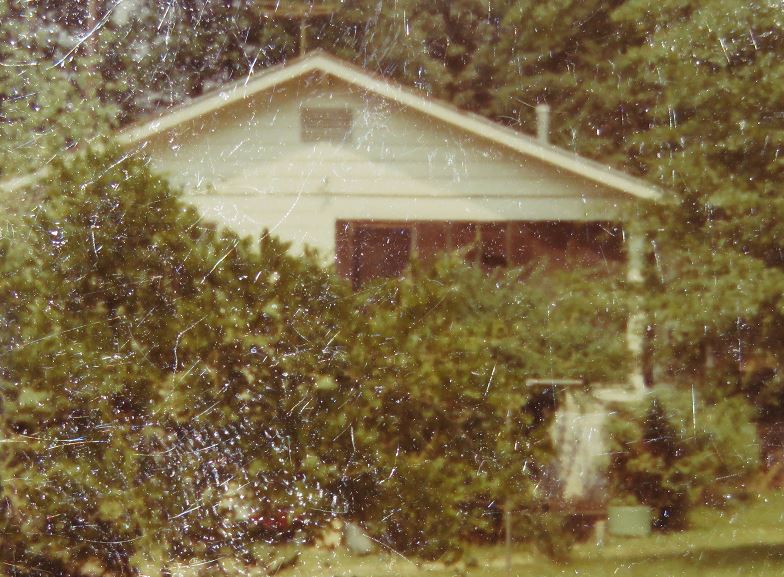
The house I grew up in on Macon Drive in Atlanta.
The 52 Ancestors theme this week is “the old homestead.”

When I saw the theme for this week was “the old homestead,” I immediately thought about my third great-grandmother Caroline (Hobbs) Lankford, who filed for and received a plot of land in Penfield, Greene County, Georgia under the Homestead Act in 1869. But I blogged about this in 2014 so didn’t want to repeat myself. You can read about Caroline here. I next thought about Grandpa and Grandma Lankford’s old home place in Penfield, but I shared the few memories I have of their home in a blog post about my Grandpa Carroll Harvey Lankford in 2016. You can read about Grandpa here. I went into more detail about their home when I blogged about our Lankford family reunions in 2015. You can read about them here. So, what homestead should I write about? I guess it’ll be the Atlanta home I grew up in.

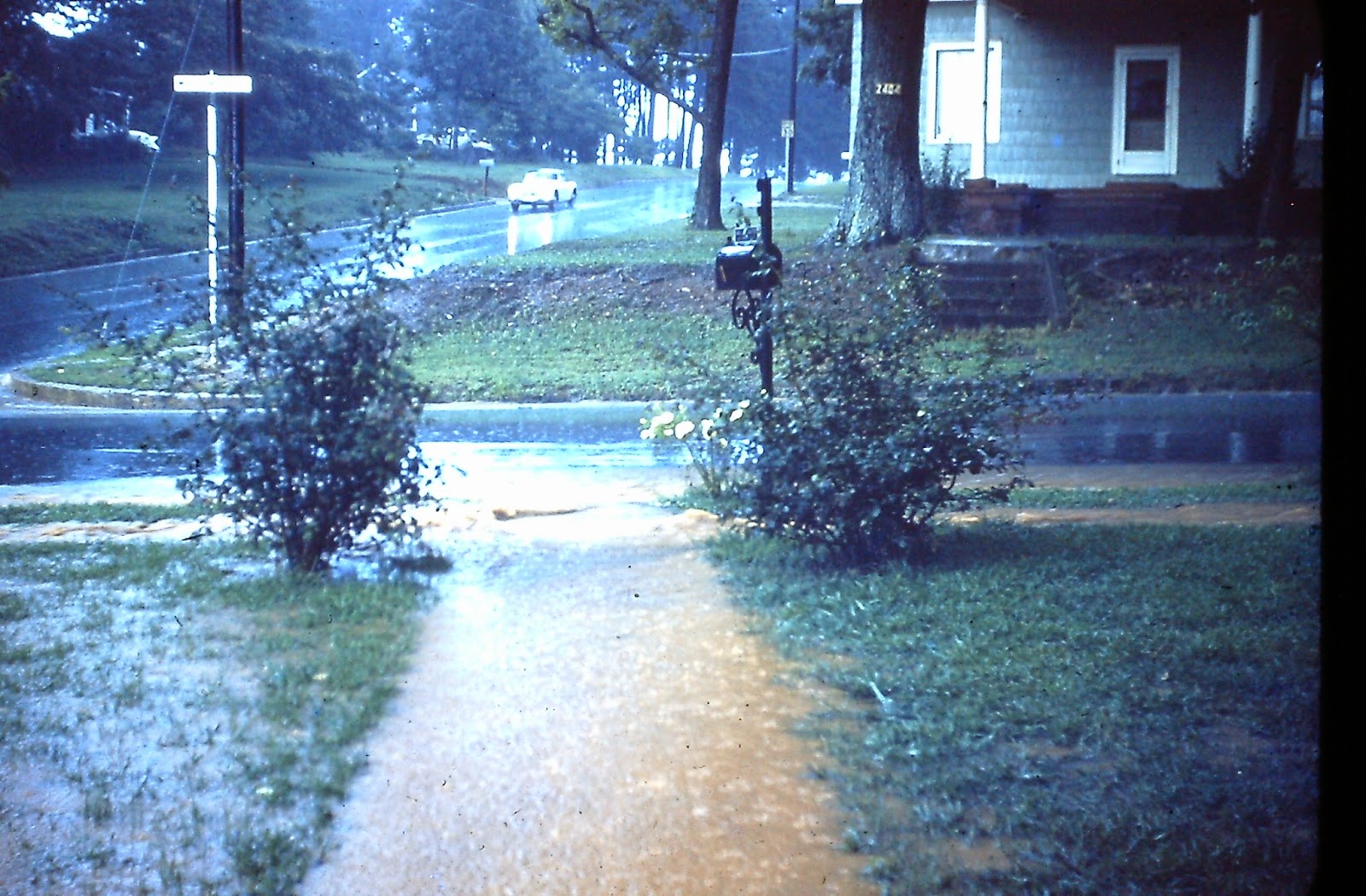
Front sidewalk during heavy rainfall. The roses were white.
I remember people stopping and asking if they could have a white
rose to wear on Mother's Day.

Shortly after I was born, my family moved from the West End neighborhood of Atlanta to a nice neighborhood on Macon Drive in southeast Atlanta. The house was your standard house, nothing fancy. The main level included a living room, dining room, small kitchen, two bedrooms, and a bathroom. The bottom level of the house was divided into two sections. One section had two bedrooms (one large and one small) and a laundry room; the other section was dirt and was where we stored tools, canned goods, and the normal junk people keep in their basements. When we first moved there, it was Daddy, Mama, and three children. But our family was still growing and within four years there were five children. At some point, my uncle Clark Lankford moved in with us so there were eight people living in the house and all with one bathroom! By the way, my Uncle Clark was like a father to us, even after he moved out of the house. I loved him dearly.

Furniture in the living room. I have the carnival glass vase on the left today. It
once belonged to my Grandma Lankford. One of my sisters has the statues in front


Front porch, after the remodel.
My brother Michael holding the cat that  was probably
named Kitty Wampus.
There was a front porch that went across the full length of the house (screened in during the early years if I recall correctly). Daddy eventually remodeled to extend the front bedroom out so we lost that half of the front porch. The house had a screened in back porch just off the kitchen. I remember Mama would go to the farmers market in Forest Park and bring home bushel bags of beans, peas, and corn and we’d sit on the back-porch snapping, shelling, and shucking. My sister reminded me that our fingers would be all purple when we were done shelling pink-eyed purple-hull peas. It wasn’t much fun but it was worth it. Mama would fill the freezer with squash, okra, peas, creamed corn, beans, and fruits. She’d can tomatoes, make soup mix, and I’m sure many other things that I don’t remember to store away for the winter months. We ate good! The kitchen had a laundry shoot near the back door that allowed us to drop dirty laundry directly into the laundry room. I remember my brother once tried to take the shortcut to the laundry room and got himself stuck in the shoot. He didn’t try that again.

View of the back screened-in porch
We had a piano in the living room and all of us took lessons at one time or another. Someone would usually have to play when visitors came. I took eight years of piano lessons but I doubt I could play chopsticks today. I love to hear someone playing a piano but it was just not for me.

I don’t know what the yard acreage was, but it always seemed large to me. There was a gravel driveway with space for several cars. Daddy built a patio near the back of the house that included a brick bar-b-que pit. I remember eating some finger lickin’ good ribs cooked on that pit. During the summer months, Mama often brought out the hand crank ice cream maker for some vanilla, strawberry, or peach ice cream. Daddy had a green thumb so we always had lots of color in the yard. And it wasn’t just flowers and bushes, we had fruit trees as well—cherry, pear, plum, apple, and even a banana tree. During the winter months, Daddy dug his banana tree up as well as a Bird of Paradise plant and transplanted both in the dirt side of the basement, in front of a window. Come spring, he’d move them back outside. One side of the house had a layered rock garden, anchored by a large rock against the side of the house. Every spring it had Thrift flowing over the rocks and in the summer, it was always filled with Day Lilies and Iris. That side of the house was lined with Baby’s Breath. At some point, Daddy started a vegetable garden in the backyard. It got bigger every year. Between his garden and the large farmers market in Forest Park, we had fresh vegetables and fruit on the table year-round.

Brother Michael on the big rock in the rock garden.

Brother Michael in the rock garden.
The Hamby's home in the background. Their son Douglas was killed in a
car accident while on military leave during the Vietnam War.
Mama's car in the background.

Hunting Easter eggs around the pear tree -- brother Michael, uncle Clark, and
sisters Vanessa and Bonita.

But our house wasn’t the only part of the homestead. It also included the outbuildings, in this case, our neighbors.

The house next door belonged to Mrs. Davis. She and her two adult children, Baxter and Elaine, lived on one side of the house. The other side of the house was Davis Grocery, a neighborhood mom and pop store. Her store was always stocked with milk, bread, canned goods, snacks, candy, ice cream, and the Coke cooler. On the nights Mama worked late, the store was already closed by the time she got home so Mrs. Davis would have us come to her back porch and to buy an evening Coke. It didn’t dawn on me until years later that drinking a Coke that late at night was probably why I had trouble falling asleep. I bought a lot of penny candy at Davis Grocery. In March, she always had kites for the neighborhood kids. I remember buying them and flying them from the hill on the side of her house. The corner where her house stood is empty today.

My brother Michael, sisters Vanessa and Jennifer, and me.
You can see Mrs. Davis' house in the background.

Neighbor Elaine Davis and sister Vanessa. Elaine went to
Panama City, Florida with us one time.

A good part of the neighborhood was made up of the Morgan and Newcomer families. Hazel Morgan lived next door to us. Her brother Charles Morgan and his wife Thelma lived next door to Hazel. Alice and Buddy Newcomer lived next door to Alice’s, parents, Charles and Thelma. Across the street were other members of the Morgan family—Raymond, Charles, Wayne, and Gene—all children of Charles and Thelma. They were a huge part of our lives.

Sisters Bonita and Vanessa standing in the front yard.
Hazel Morgan's house is next to ours; Charles and Thelma Morgan's next to Hazel's.
Alice and Buddy Newcomer once lived in the Charles Morgan house and Charles and Thelma lived next
door to them. At some point, they traded houses.


We also hung out with the Strickland, Rath, and Kingston families who all had children the same ages as the five of us. All three families were a huge part of our lives.

Celebrating someone's birthday with the neighborhood kids in our living room.
The house had a fireplace at one point. I only remember the mantel being there.

Sister Jennifer standing in the front yard.
You can see the house still had the full screened-in porch then. The house in the background belonged to the Raths.
Mrs. Rath eventually remarried so at that point, the Knights. The Rath house was on top of a large hill.
That was "the" place to go sledding when it snowed.

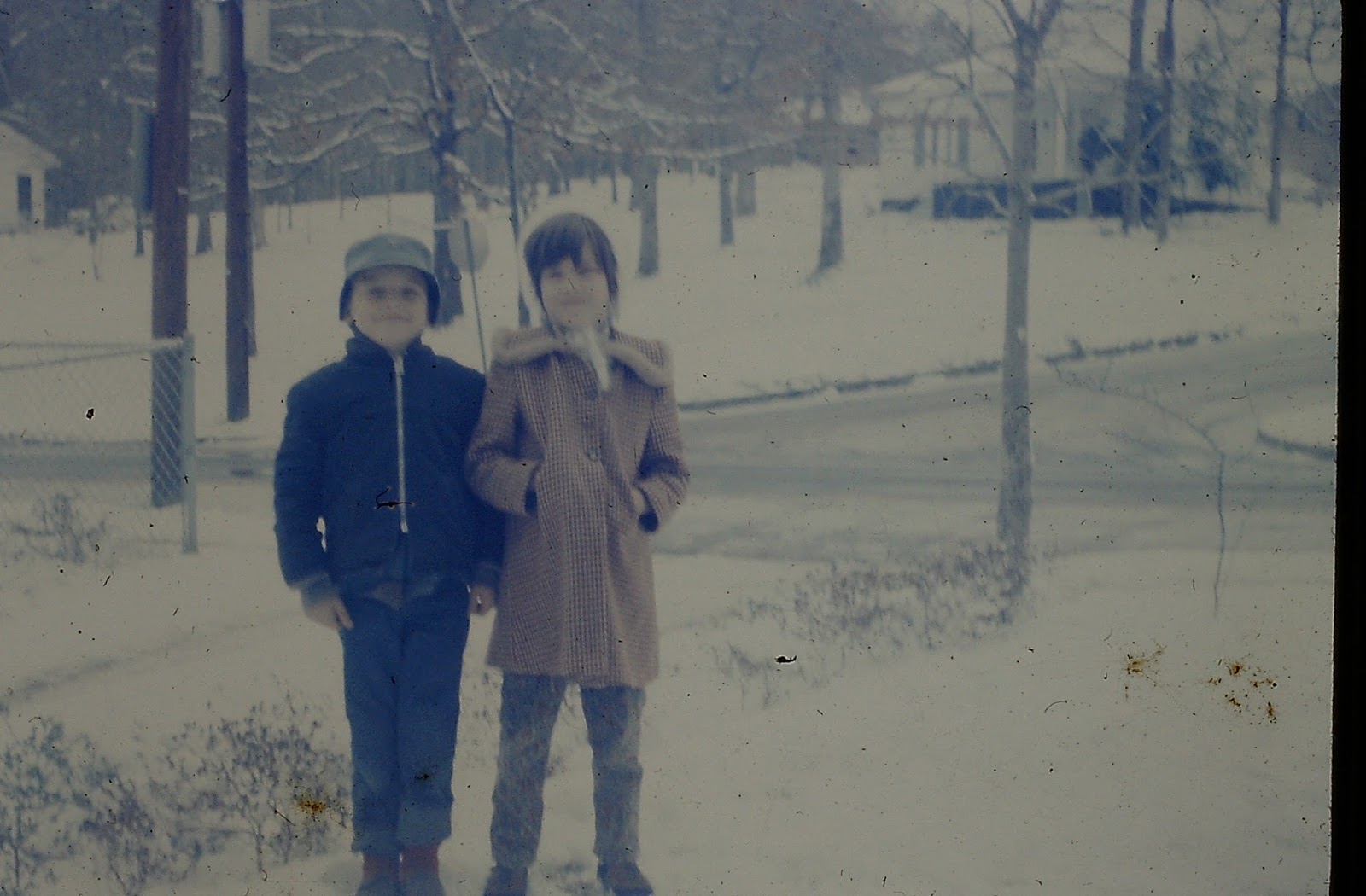
Bromack Drive was across the street, ending at Macon Drive. If you kept going, you’d go down our driveway. The road had a slight incline and I remember sitting at the living room window during ice storms, watching cars trying to make their way to the top of the incline. I still think about that today when I watch cars try to get up the small hill across from my house during snow storms.

Bromack Drive meets Macon Drive.
My brother Michael and I. You can see three of the Morgan houses in the background.

The Lakewood Fairgrounds were just over a mile from our house. Every fall, the Southeastern Fair came to town for at least a week, maybe two. The entire neighborhood gathered on Meadow Park Drive (the street that ran beside the Davis house and where the Strickland, Rath, and Kington families lived) to watch the fireworks show put on at the fairgrounds. We could see them above the trees from the side of Mrs. Davis’ backyard. That was always a fun time of the year. If you saw the Smokey and the Bandit movie, you would have seen the fairgrounds in the opening and closing scenes. In the second Smokey and the Bandit movie they blew up the old wooden roller coaster.

Our home in Atlanta was a great house and a great neighborhood and I have very fond memories of that time of my life. My husband and I have lived in our house (our starter house) for 37 years. I hope my sons feel the same way about our house years from now.


Photo of Southeastern Fair, Nan Peeples saved to MY HOMETOWN, Old Lakewood Fairgrounds.

Friday, March 23, 2018

Clara Bell White's misfortune

The 52 Ancestors theme this week is “misfortune.”

Clara Bell White, the daughter of Candler Milton White and Lenora Dean Lankford, was born on February 9, 1898 in Georgia, most likely Clarkston, DeKalb County. She was the oldest child of three—Clara Bell White, Charles Candler White, and Russell L. White. Clara would be my 3rd cousin 3x removed with our nearest common relatives being Nathan Lankford and Marion Caldwell who were married in Rutherford County, North Carolina about 1790.

In September 1899, baby Charles was born in Clarkston making Clara a big sister. The family still lived in Clarkston when the census enumerator visited on June 5, 1900. On that day, Clara’s parents had been married for three years. Her father made a living as a carpenter. Clara’s youngest brother Russell was welcomed into the family about 1902.

Sadly, Clara’s young life came to a tragic end on September 26, 1904 when she died after contracting tonsillitis in Clarkston at the age of six. Clara must have died early on the 26th as her death was reported in The Atlanta Constitution that same day. The news article noted that Clara was buried at Indian Creek Cemetery in Clarkston, however, Find-A-Grave has Clara’s burial location as Clarkston Cemetery and includes the photo used here. An Indian Creek Cemetery transcription found on the Georgia USGenWeb Archives Project website lists Clara’s parents but not her so perhaps there was a last minute change in cemeteries at the time of burial.

Had Clara been born today, the doctor would have prescribed antibiotics once she was diagnosed with tonsillitis and she probably would have recovered within days. Unfortunately, she had the misfortune of being born in 1898, long before penicillin was discovered in London in 1928 and first used on humans in March 1942.

References

1. The Atlanta Constitution, Atlanta, Georgia, September 26, 1904.
2. The real story behind penicillin, WETA PBS News Hour, September 27, 2013. 
3. Tombstone photo by Quietly Resting, Find A Grave Memorial 40237381.

Friday, March 16, 2018

Benjamin Smith's baby dress

The 52 Ancestors theme this week is “lucky.”

This beautiful baby dress once belonged to Benjamin Gordon Smith, my husband’s grand uncle. Ben was born in Apollo, Armstrong County, Pennsylvania on November 18, 1882 and was the first born child of John Milton Smith and Amanda Larimer Horne. He was an only child until his brother George was born on October 22, 1885.

In 2008, my father-in-law (Earl Murphy) was in declining health so he moved to an apartment near us. At the time, he still owned a house about 25 miles away. He and my mother-in-law (Mary Athya Murphy) purchased the house in 1981, planning to move there when he retired. Earl spent several years remodeling the house while still living in the family house. Once he was ready to retire, they sold the family house and moved to the retirement house. We helped them clean out the family house attic, which contained many boxes that hadn’t been opened in years. Those boxes were moved to the retirement house and placed in a cement block shed that stood beside the driveway where they would remain unopened for many more years.

Before her death, Mary told me several times that there was a program in the shed from Apollo’s 125th anniversary celebration in 1941. Because of this, and assuming there would be other documents, I knew it was important to go through every box when we  cleaned out the shed in the late 2000s. Having done a lot of research on the Smith family, I was on the lookout for the celebration program, which we found, along with many other documents that are gold to a genealogist. It turns out, the boxes contained items that had once belonged to my husband’s maternal grandmother, Bertha Edna Smith Athya and his maternal great-grandmother, Amanda Smith. I remember opening one cardboard box in particular. Inside the box were odds and ends as well as a dirty plastic bag. I could tell there was a piece of cloth wadded up in the bag but had no idea of what I was about to discover. When I opened the bag, I found this baby dress. My mother-in-law was the only person who would have known anything about the gown, but she had passed away in 2006. Lucky for us, Mary’s mother, Bertha, had written a note and placed it inside the bag with the dress. The note reads:
Uncle Ben Smith’s baby dress made by his mother about 1884. His birthday Nov. 16, 1882. Died Dec. 15, 1956. His mother Amanda Horne Smith.
Note found inside the bag with the baby dress, written by Ben's
sister Bertha Smith Athya. (Note: all records show Ben's birthday
as Nov 18, not 16).

Ben never married and lived with his mother Amanda for many years. It’s assumed that once the dress had met it’s needs, Amanda packed it away for safekeeping. I have no way of knowing if Ben ever took possession of the dress as an adult but I doubt it. My guess is it stayed packed away with his mother’s possessions until she passed away in 1943. Amanda was living with Bertha at that time so being the only girl in the family that survived, she took possession of the dress and it moved with her to Ohio after Amanda’s death. In 1949, Ben moved to the Elks Home in Bedford, Bedford County, Virginia where he died in 1957. Bertha was living with Mary when she passed away in 1979. Mary kept many of her mother’s belongings, the dress being one of them.

The 1880 census record shows that Amanda was employed as a dressmaker so it’s no surprise that she made this dress for her first-born child. She would have been 24 years old at the time.

Amanda and Ben Smith

After finding the dress, I brought it home and gently cleaned it with baby laundry detergent, then laid it flat to dry. I spent a Sunday afternoon looking for a baby hanger in the local shopping center and no one had anything appropriate for sale. I finally found one in a baby clothes display at Macy’s. I asked if they were for sale, which they weren’t. They had several laying around the cash registers though and one of the cashiers gave one to me.

The dress is 19 ½ inches in length and 10 inches wide at the waist. The material, which is very thin, is the color ecru. The dress has some damage—four small holes on the front skirt, two round holes on the back, and a long-frayed tear on the back. I see the beginnings of a small hole on one sleeve. Otherwise, it’s in fair condition.

The dress is about 134 years old and now hangs in my bedroom. Thank God Bertha left a note in the bag with the dress or we would have never known the history behind the dress.

Holes on the front skirt

Back of the dress

Back of the dress

Back arm tear

In 2014, I set a genealogy goal to document our family treasures. Although I’ve included this item in previous posts, I recently realized it needs to be added in the family treasures series so this post takes care of that.

Friday, March 9, 2018

My Mama, the strongest woman I know

The 52 Ancestors theme this week is “strong woman.” I didn’t have to think too long to determine the subject of my blog post this week.

What comes to mind when you think of a “strong woman?” Do you think of one of the female athletes we just watched during the PyeongChang 2018 Winter Olympics? Maybe you think about Mother Teresa or Rosa Parks, two women that helped change the world. Or perhaps you think of one of the World Wrestling Entertainment (WWE) divas, or She-Ra, the Princess of Power? Not me … when I think of a strong woman, it’s my Mama that comes to mind, Fay Lankford.

What makes her a strong woman? Well, let me tell you …

… Mama was just a young girl when her mother left home, leaving her only child behind. Granny would come and go in Mama’s life for the rest of her childhood, including having little contact with her from 1941 to 1948. Granddaddy was a truck driver so had to depend on help from family, neighbors, and hired help to take care of Mama. She had a lonely childhood.

Granny and Mama

… At age 15, Mama met and married Daddy. My sister was born the following year. Later that same year, Daddy came home and told Mama he was selling the house to a couple that lived with them and she could do whatever she wanted. Mama’s uncle helped move her and my sister to Tunnel Hill in north Georgia. The two of them moved between houses, staying with Granny and my Grandma Shields (Granny’s mother). At one point, Mama and my sister were separated for several months when Granny moved to Tennessee and took my sister with her. Mama divorced Daddy that year.

Mama, my sister Bonita, and Daddy

… While living in Tunnel Hill, Mama got a job in Chattanooga, Tennessee. With no car, she left home three and a half hours before her shift at the textile mill began and walked three miles to the bus station, then rode the bus 20 miles to Chattanooga, and finally caught a city bus to the mill. Her shift ran from 3 to 11 PM and then she made the same trip home. After several weeks of this routine, she was able to get a room in Chattanooga and found someone to help take care of my sister while she worked. They lived there a year before Mama got an apartment of her own.

… After moving to the apartment, Daddy re-entered the picture for a few days but then left again. Mama and my sister moved back to Tunnel Hill and stayed with Grandma Shields. Daddy eventually came back, they remarried, and Daddy helped Mama and my sister move back to the Atlanta area.

Grandma Shields, Mama, me, and Jennifer

… Four more children were born but by all accounts, it was a lonely, loveless marriage. Daddy worked and provided for the family but mostly kept to himself. Mama took care of everything else. She was involved in school, took us to church, and made sure we were always doing something fun. When I look back at family pictures, we spent a lot of time around water—going to Lake Spivey and Joy Lake. She saved her money and took us for a beach vacation in Florida every year. At least seven or eight houses in our neighborhood belonged to one family. They welcomed our family into theirs and invited us to join them at their property on Lake Jackson, their vacations in Daytona Beach, and even their family Christmas parties. They would often take us kids to the lake during the week and Mama would join us on the weekends. Mama and the five of us kids spent many, many fun times with them.

Michael, Mama, Jennifer (back), Vanessa (front), Bonita, and me

… Mama eventually divorced Daddy again but she waited for all five of her kids to reach adulthood before taking that step.

… Mama worked a full-time retail job all those years, managing a shoe store. She was robbed multiple times during her many years of employment—five times with a gun and twice with a knife. I would have quit after the first time but she didn’t.

… Mama was scheduled to go on a trip to Italy the fall of 2001. Then 9/11 happened. Many people felt she shouldn’t go but she said “if the State Department doesn’t feel it’s safe for us to go, they won’t let us go.” I would have cancelled but she went and had a ball.

… Volunteering has always been important to Mama. When we were young, she volunteered with the March of Dimes. In 1996, Mama was a volunteer during the Atlanta Olympics, working security. She served on the Clayton County Senior Advisory Council for the Parks and Recreation’s Senior Adult Division where she helped develop programs for the seniors. She worked with the Red Cross, supporting blood drives and disaster relief. Mama was named Clayton County’s (Georgia) Red Cross Volunteer of the Year in May 2002. The Red Cross Disaster Relief sent Mama to North Carolina in 1999 after Hurricane Floyd and to Oregon in the summer of 2002 to help with the fires. As part of the Clayton County Golden Kiwanis Club, she supported schools, battered women’s shelters, the March of Dimes, and helped prepare food baskets to pass out at Thanksgiving and Christmas. She has been active in senior centers for years. She was there at tax time to help organize the seniors coming to get their taxes done. For several years, she cooked treats to sell at the senior center to raise money for birthday parties. She organized a group of women (and one man who drives his wife so he joins in) that meet monthly for lunch. They call themselves the Gruntin’ Grannies because she said they all grunt when they get out of their chairs or cars. Now I giggle every time I hear myself grunt when getting out of my car! She’s always thinking of something she can do to help someone.

… Mama has had several health setbacks in the last 25 to 30 years. She was near death a time or two but thankfully pulled through. On one occasion, I spent three weeks at my youngest sister’s house helping her take care of Mama. I gained a new respect for healthcare givers during that time. It was the hardest thing I’d ever done and I wasn’t the one in recovery. During her recovery, Mama did everything the doctor told her to do because she wanted to get back to her normal life. My sister, who has health issues of her own, has been a rock in watching over Mama for many years and I appreciate everything she does. They take good care of each other.

Mama last came to Virginia in May 2017 and while she was here, it struck me that she is a very independent woman. I hadn’t thought about her that way before. While clearly handicapped, she didn’t want to be waited on. She was perfectly capable of getting herself out of the chair or the car. Mama didn’t let the setbacks in her life hold her back. She likes to say she’s making rocking chair memories. Well, I think she’s made enough to last many lifetimes! Mama is the strongest woman I know. She raised five productive children. She persevered. I hope I can be half the person she is. She’s my hero.

Friday, March 2, 2018

Willie Mae Shields

Willie Mae (Shields) Smith
The 52 Ancestors theme this week is “Where There’s a Will” so I thought I would write about a female member of the family that fits the bill—Willie Mae Shields.

Willie Mae Shields, daughter of James Stewart Shields and Hattie Jane Rhinehart, was born on July 3, 1914 in Varnell, Whitfield County, Georgia. She was the 2nd child of 11—Daisy Lee Shields, Willie Mae Shields, James B. Shields, Betty Ann Shields, Paul Sam Shields, Bessie Lucille Shields, Mary Nell Shields, Dorothy Joline Shields, Bobbie Jean Shields, Charles Dewayne Shields, and Loyal Mack Shields. It’s believed that Hattie had a 12th child, possibly stillborn, but I’ve not found any proof of that. Her older sister Daisy was my granny so she was my grand aunt. I know we visited her a couple of times when I was very young but I don’t remember her at all. What I share here comes from my research and memories of a few family members. Her life timeline follows.

What goes into selecting your baby’s name? I know for my children, we simply created a list of names and crossed them off the list until we came up with a combined name we both liked. I probably shouldn’t admit it, but it never entered my mind to name my children after anyone. I wonder how my Pappy (James Stewart Shields) and Grandma Shields (Hattie Jane Rhinehart) came up with the name Willie Mae. Did they just pick the name out of the blue? The name wasn’t that popular at the time. There were 23 girls given the name Willie Mae in 1914 according to Names.org, although WeddingVendors.com includes the names “Willie” and “Mae” on the list of “100 Most Popular Baby Names of 1914.” According to the Social Security Administration, the name Willie was number 66 and Mae was number 88 in the “Top names of the 1910s” for women. With “Willie” being a shortened form of William, perhaps Willie was given this name to honor family members. Her grandfather was William Dearnald Rhinehart; her great-grandfather William Robert Sneed. Another great-grandfather is said to be William Cleason Ogle although I still need to prove this one. Her uncle was William Elmer Shields. Her middle name “Mae” could have been to honor two of Willie’s great-grandmothers who were named Mary. According to Babynamewizard.com, “Mae” is a “pet form” of Mary. I guess I’ll never know but I do like that it’s a very Southern name which was appropriate given that Willie and her family lived in north Georgia.

Stewart Shields, Daisy Shields, Hattie (Rhinehart)
Shields, and Willie Mae Shields
A month before Willie’s second birthday in 1916, her brother James, the first boy in the family, was born at home. Her sister Betty was welcomed into the family in 1919.

On January 6, 1920, Willie and her family lived in the Lower Tenth District of Whitfield County, Georgia. She and Daisy were both attending school. Willie’s father was a farmer on a general farm. Her 54-year-old widowed maternal grandmother, Betty (Sneed) Rhinehart, lived in the home with the family. Three more siblings were added to the family during this decade—Paul Sam in 1922, Bessie in 1924, and Mary in 1927.

On April 19, 1930, Willie and her family lived at Prater Mill and Deep Springs Roads, still in the Lower Tenth District of Whitfield County. At age 15, Willie did not attend school, however, she was able to read and write. Farming was still the occupation of choice for her father. Willie’s paternal grandparents, Cas and Martha (Ogle) Shields, lived next door, along with her uncle Blaine Shields. Willie’s parents now had a full house (with more to come) of eight children with the girls outnumbering the boys six to two. Joline, Bobbie, Charles, and Mack were all born during this decade.

At age 24, Willie was practically a spinster when she married Loyal Cecil Smith, son of William David Smith and Annie Mae Reed, on March 18, 1939, location unknown. No children were born to this union. Willie did become pregnant once but lost the baby and was never able to have others. I feel sad for Willie that she was unable to have children, but being the second oldest of such a large family, I’m sure she had her hand in raising many children.

Cecil and Willie Smith

At the time of their marriage, Cecil had been living in Chatsworth, Murray County, Georgia and Willie in Dalton. By the time the census enumerator made his rounds on April 26, 1940, they had made their home in Dalton, Whitfield County, Georgia. Willie stayed at home keeping the house while Cecil worked as a clerk in a retail grocery store. It appears they spent a short time living in Chattanooga, Hamilton County, Tennessee as I found them listed in the 1942 city directory. Cecil worked as a truck driver for the Malone Freight Line at the time.


By 1951, they had moved back to Dalton. At the time, Willie worked as a machine operator for Dixie Chenilles which is not surprising since Dalton is known for its textile/chenille industry. Willie and Cecil still lived in Dalton in 1958 according to the city directory.


On September 7, 1962, Willie’s father (my Pappy) suffered a blood clot of the heart and was found dead in the field by his house in Tunnel Hill, Catoosa County, Georgia. Her brother James lived in Alabama when he passed away in 1972. Her sister Betty also lived in Alabama when she passed away in 1975. Pappy and James were both buried at Nellie Head Cemetery in Tunnel Hill. Betty was buried at West Hill Cemetery in Dalton. Willie’s mother Hattie (her children called her “Mommie,” we called her Grandma Shields) passed away in Chattanooga in 1982. Grandma Shields was buried with Pappy at Nellie Head Cemetery. Daisy (my granny) passed away in Riverdale, Clayton County, Georgia in 1987. Granny was buried at Anderson Cemetery in Ringgold.

There was most likely always music in the Shields home. Willie’s father played the fiddle and her mother the banjo. I don’t know about the girls in the family but have seen photos of Paul Sam and Mack playing as well.

Frizzle chickens. Photo by
Jean Bungartz [public domain], 
via Wikimedia Commons.
Willie and Cecil had Frizzle chickens, which according to Wikipedia, “is a breed of chicken with characteristic curled or frizzled plumage.” Mama described them as chickens with the feathers turned backwards. She also remembers them having stuffed rabbits and snakes sitting on the mantel.

After Willie was diagnosed with cancer, the Reed family and her brother Charles’ daughter took care of her. Willie died on January 13, 1994 at the age of 79 in a Dalton hospital. She was buried on January 15 at the Reed Family Cemetery, a private cemetery in Chatsworth on top of a hill overlooking the mountains. They had to dig through solid rock to make the grave.


Willie and Cecil Smith

Photo by Vida Betterton from Find A Grave ID 47182808.

Friday, February 23, 2018

Electra Smith's water pitcher

Electra's water pitcher
The 52 Ancestors theme this week is “heirloom” so I’d like to tell you about a water pitcher that was given to me in the late 1990s by my mother-in-law, Mary Athya Murphy. Mary held on tightly to her belongings so it was a surprise when she gave it to me. I had been researching her Smith family, which she had said would be impossible to figure out because they had such a common name. Fortunately, her ancestor named her first three children with “E” names—Electra, Erastus, and Eunice. This made it very easy to research this family! After I’d spent a year or so working on this line, I began to feel like I knew the Smith family. I’m sure many of you feel the same way about the ancestors you spend so much time researching.

Mary kept Electra’s water pitcher on top of the organ in their living room. At the time, it was filled with cattails and other dried flowers. On one visit to their house, I shared with Mary my feelings about the Smith family and told her I’d love to have Electra’s water pitcher if she was ever ready to give it up. It didn’t happen immediately, but one day as we were saying our goodbyes, she gave it to me. I promised Mary I’d take good care of it for her.

Electra Smith Jack
This water pitcher originally belonged to Electra B. Smith, Mary’s grand aunt. Electra, the daughter of John Thompson Smith and Jane Gordon, was born in Armstrong County, Pennsylvania (probably Apollo) on February 11, 1841. Electra and her husband Daniel Jack (a Civil War veteran) spent their last years living in the home of George Athya and his wife Bertha (Smith) Athya, Mary’s parents. Daniel died in the house on December 10, 1925 before Mary’s birth in 1929. Electra continued to live with George and Bertha in the house until her death on April 22, 1932. I assume that Bertha kept the pitcher after Electra’s death. Although Electra helped raised her sister’s six children, she never had children of her own. Since Electra was living with Bertha, one assumes they were close so it makes sense that Bertha would take possession of the water pitcher at that point. Bertha was living with Mary in Virginia when she died in April 22, 1979 (and I just realized as I’m writing this that both Electra and Bertha died on the same day, April 22!) so the pitcher became Bertha’s at that time. Mary kept the pitcher from 1979 until the late 1990s when she gave it to me.

Electra married Daniel Jack, the widow of her sister Eunice, in Apollo on February 20, 1896. This tells me the pitcher is at least 122 years old since the last name on the side is her maiden name “Smith,” not her married name “Jack.”

The white glazed pitcher is in good condition. It has grape leaves on both sides and underneath the spout. There is gold stenciling on the handle, around the mouth, bottom, and on the leaves.


The name “Electa Smith” is also stenciled on the front. The height of the pitcher is 9 inches at the spout and 10 and a quarter inches at the handle. The base is 4 and a half inches and the bowl about 8 inches.


The stenciling shows some wear on the handle and spout but otherwise is in good condition.


The marking on the bottom is “AF” followed by a period. There is the number 2 underneath the AF. The “A” and “F” share the same line.


Electra’s water pitcher sits on the dresser in my bedroom so I see it every day. I often find myself reflecting on what life would have been like for Electra in the late 19th, early 20th centuries.

I plan to keep my promise to Mary and take care of this Smith family heirloom.

Electra holding my mother-in-law Mary Athya, ca. 1930